Friday, September 22, 2017

We live in what we imagine


“Bless the spirit that makes connections,
for truly we live in what we imagine.
Clocks move along side our real life
with steps that are ever the same.
Though we do not know our exact location,
we are held in place by what links us.
Across trackless distances
antennas sense each other.
Pure attention, the essence of the powers!
Distracted by each day's doing,
how can we hear the signals?
Even as the farmer labors
there where the seed turns into summer,
it is not his work. It is Earth who gives.”

~ Rainer Maria Rilke ~


Tuesday, May 23, 2017

Castles and Cold Waves of Copenhagen


If Copenhagen were a person, that person would be generous, beautiful, elderly, but with a flair. A human being that has certain propensities for quarreling, filled with imagination and with appetite for the new and with respect for the old - somebody who takes good care of things and of people.
Connie Nielsen

It appears that Ms. Nielsen was describing my Danish landlady when she said these words. At the age of 82, Eva was standing outside her Osterbro home, wearing a warm smile on that chilly morning. She was braving the cold wind to welcome me to Copenhagen on the Monday after Easter. One look at her and I felt at home. If you go from one of the most populous countries of the world to Scandinavia, you marvel about many things. To begin with, octogenarian landladies who wear red lipstick and ride bicycle, live alone, plant flowers, bake cakes and are perhaps fitter than you. The warmth, pride in Danish culture   coupled with eccentricity runs in all streams of Danish life. It reflects in their majestic castles, their cuisine and also in their quirky designs. But at some level the life is much evolved. Luckily, I got to decipher this Danish puzzle in the best season of the year – spring.
Talking of weather, April was supposed to be warm and welcoming. Then why  there  was this skin piercing cold wind which not only moved the gorgeous windmills in the sea but also quaked my bones covered with multiple layers of clothing. The trees on the road were bereft on any leaves and the green grass below was only half awake after the harsh winter. There were hardly any flowers in sight – even in the famous King’s Garden. To my Indian mind, this was no spring.

For me the first look of the city was of a deserted town. There were absolutely no signs of humans on street. First I blamed it on winds, then on extended Easter holidays. Finally on the third day,  the realization dawned that perhaps there are not many people in the city. Well, this was true till the weekend came. As Helen Derbyl writes in her guide on Denmark that the population is scant unless the weather is very sunny or the Swedes very thirsty. So it was only on the first weekend that we saw people and cycles – people on cycles and people walking on the streets…mostly to the beer  bars .

Image result for copenhagen cycle with baby
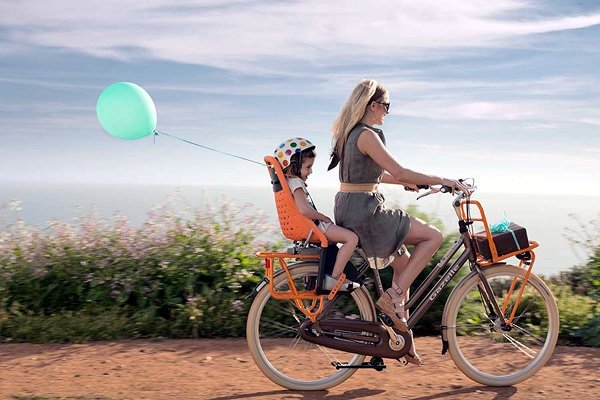
 It’s a strange capital city- a place where pedestrian set the pace not the automobile traffic. It was rather common to find in Copenhagen mothers safely parking baby carriages (or the famous Christiania bikes with a cart to carry stuff/ babies in front) outside bakeries while outdoor cafés fill with cappuccino-sippers, and super fit lanky Danes pedal to work in lanes thick with bicycle traffic.
In my 11 minute walk to workplace in Mormovej every morning , it was a sheer delight to face the crisp morning air punctuated by golden sunshine in the pedestrian streets redolent of baked bread, baskets of organic strawberries  and soap-scrubbed storefronts. If there's such a thing as a heartwarming city sight, this was it!
No wonder that when today’s glittering world metros with their high-rises and  traffic troubles , seek enlightenment, they commonly look to Copenhagen. The Danish capital regularly tops world liveability lists. This is one of the globe's greenest, cleanest, most sustainable urban centres, a place where cycling is serious transport, where buses and the metro run frequently and around the clock, and where the harbor is squeaky clean enough for a bracing dip.
But Copenhagen has always been far more complex than Denmark’s “happy nation” reputation. It had other layers to show as well- in all shades of greys , much like the designer coats I admired people wearing there  .   The gorgeous old town with splendid historic buildings stands near areas that have only recently seen a renaissance after years of gang violence, prostitution and ethnic tensions. The in-famous Freetown Christiania was just a walk away from the city centre with its cannabis selling Pusher Street. In my tour of “alternative”-Copenhagen, I saw some of these areas and was amused to find the unique “solutions” devised by the policymakers to deal with these. To quote one, the state funded designer drug consumption rooms providing a safe haven for drug addicts to inject themselves in calm surroundings may sound weird to many of us. But as the experiment shows, it has proved to be an effective method of bringing down the drug menace and making the neighborhood safe for kids.


For me the more attractive were the places associated with city’s history of witch hunts, executions, mobsters and murderers. With such morbid details of history, it is funny that the city is also reputed to be the fairy tale city. When I set out to explore the Fairy tale side of the city, I went in search of Hans Christian Anderson’s Little Mermaid and almost accidentally discovered magic of Danish weather. In the Langelinie Park, the trees which were standing bare just the other day were almost bursting into pink Cherry Blossoms. With a cute little English Church in the backdrop, combined with the imposing Gefion fountain depicting the Norse goddess Gefjun, the cherry blossoms were on a bloom leaving no doubt that the spring had finally arrived.  It, however took me another weekend to realize that there can be an even better place to admire cherry and almond blossoms – Bispebjerg Cemetery. The explosion of a pink and white flower sky was mesmerizing in sprawling space of Bispebjerg Cemetery.

While the little Mermaid surrounded by selfie clicking tourists did not impress me much- it opened my mind to the idea of discovering fairytales at oddest possible places. And then I found them – underwater bronze statues of the family of Agnete and Merman, twisted dragon tales on the old Stock Exchange (Borsen), the spiral stairs to (almost) heaven on the baroque Church of Our Saviour , snow leopards and wolves adorning the town hall building …and of course , Holger the Dane who sits asleep in the casemates of Kronborg Castle - until the day when Denmark is in real trouble and he will wake up and defend the mother country.
After a month of stay, I came to the conclusion that despite all jokes about their language and behavior, Danes definitely have their lives sorted like none of us. They do appreciate what really matters – clean air, green grass, blue waters of the sea….and perhaps a good drink to go with it. They live simple lives enjoying and not destroying nature. They peddle their cycles with great joy – without any pretensions and consciousness of wealth or class . 


In the words of  Xenophobe’s Guide to the Danes –
“For the Danes, culture is a way of shedding the modern world and retracing their roots. All Danes are inveterate nature lovers. They cultivate an almost masochistic feeling of insignificance coupled with awe at nature’s power and the forces of life. Danish literature is full of examples of characters trying to come to terms with man’s essential loneliness and unimportance.”
If you ask me that is the way to go.

Thursday, April 20, 2017

Yerushalayim Shel Zahav - Jerusalem of Gold


There can be various reasons for never ever visiting Israel and if you ask me, the rude airline staff of El Al should feature in top 5.  But that is not all. Visa interview for Israel is a unique experience too. On the day of my visa interview at Israel embassy I was asked, along with other two visa aspirants  to stand 250 meters away from the gate in blazing sun so that we are no security threat to the embassy. After one hour of wait, in the interview I was asked (very politely) that how do Israel Embassy assure itself that I do not intend to take up a permanent employment in Israel. I was clueless how to politely convey that I am not mad enough to leave a steady job of 17 years in Indian Civil Service to think of migrating to Israel. But the guy was not just completing the checklist. It was a serious question asked earnestly. So I responded with a serious face and luckily was able to satisfy him that someone who is neither Christian nor Muslim nor Jew may also consider to visit Jerusalem for vacation. The person before me was not so lucky, when he explained that he has no intention of staying in Israel beyond 7 days of vacation, and that he has a comfortable life and business in India, the Embassy officer shrugged with disinterest. He said “Prove it.” Visibly baffled, the person exclaimed – “How? And with such rude behavior, I doubt if I would like to go there at all.” The embassy clerk looking straight into the visa aspirant’s eye and  told him “As you wish. You wanted to visit Israel, we never asked you to.” That was my first introduction to Israel’s paranoia with security.


However, with all the problems of getting visa, firming up travel and logistics and the scolding of people around us (“Israel! Who travels there for leisure...go to US or Western Europe.”), the bunch of crazy five (actually 4.5) landed at Tel Aviv earlier this year.  And looking back, what an experience it was! Unique. Incredible. Breathtakingly thrilling.


Israel is spectacular. It is nothing like Europe or Asia or any other place in the world (perhaps). Tel Aviv the cosmopolitan city stands next to Jaffa old city, which is still frozen in medieval age. Israel Philharmonic Orchestra was divine and the Museums were world class.   Haifa the port town is picture perfect. Dead Sea is seen-to-be-believed kind of place.  Even the barren hills of Masada fort leave you so awestruck. Haifa, Caesarea, Jaffa ...all places are beautiful but nothing prepares you to face Jerusalem. There is something about this ancient city, a disputed city that is so important to people of three Abrahamic religions - Judaism, Islam and Christianity. It is so mind blowing that it attracts - or perhaps even causes - a special kind of madness. For some people, Jerusalem is a condition, like being in love; for others, it is a state of mind, a constant tension between rival flags and faiths, or members of the same faith. You may feel moved, energized, or swept into the maelstrom of contemporary or even historical issues—but the city will not leave you unaffected. No, none of us came back with the famed Jerusalem syndrome but then, it was nothing less than a mad plan for us to go there in the first place.

The parallel with two other cities – Varanasi and Rome comes to mind when you think Jerusalem as an eternal city. Now that I have been to all three I can say with certainty that each of these three sacred cities have their own character – they do have great energies but apart from that each one is unique. 
Jerusalem is a city suspended between heaven and earth, East and West, past and present—parallel universes of ancient wall with wailing pilgrims and trendy coffee shops not so far from it. The first thing you notice in this holy city is that the past is not past but it is still passing. Whether it be the past associated with biblical tales or that of holocaust, it continues to live in every moment of the city. The stories of Jesus’s life do not seem to be mere stories written in some ancient sacred text- they suddenly appear to be very real. The grief of Holocaust is not a thing of past- it still guides the minds of the people in their individual and national decisions.  And ironically, this is perhaps the only city where facts are irrelevant. Beliefs , sayings, traditions and even dreams rule the flow.

And so, as we continued our exploration of the Holy City of Jerusalem, we too began to take things on faith. The guides issued repeated  disclaimers  while showing sites and parallel sites of the same events  but after a while, it simply didn’t matter . If you are a Muslim, you believe that the Prophet Muhammad ascended to heaven from Temple Mount, conversed with God, and returned to inspire his followers. If you are Christian or Jewish, you believe that the stone inside the Dome of the Rock is the place where Abraham was ordered by God to sacrifice his son Isaac. Druze, Samaritans, Bahá’í, Coptic Christians, Ethiopian Christians, and Armenians all believe that miracles of faith occurred in this ancient city. And almost everyone chooses to believe that if you write a prayer on a slip of paper and shove it into a crack in the Western Wall, your prayer will be granted. Like everyone else, we descended to the wall and dutifully left a note. I am not particularly a religious person, but my rational mind tells me that there must be something in this land that faiths which otherwise do not agree on most things, agree on the sacredness of this place.
Like Varanasi for Hindus, the faithful of the Abrahamic religions aspire to be buried on Mount of Olives. From atop the Mount of Olives we surveyed the Holy city of Jerusalem in all its glory. Directly below us, white marble caskets in the Jewish cemetery tumbled down the hillside like giant rows of dominoes. This cemetery may be the most expensive real estate in the world as the tradition holds that those who are buried here will be the first to be resurrected when the Messiah appears. No wonder that people from all over the world pay thousands of dollars for one of these tiny plots.  The price of eternity, however, is escalating as the cemetery is fast running out of space.
 But the mountain in not only just the cemetery. It is also ( believed to be ) the place  from where Jesus ascended to heaven , Garden of Gethsemane where Christ prayed before God for the very last time before being betrayed by Judas and Chapel of Dominus Flevit, the place where, according to the Gospel of Luke, Jesus wept over the fate of Jerusalem.
Travelling in and around Jerusalem is mystifying. There is so much history, so many legends and so much to understand. How do you cram 4000 years of history, faith and myths in one week? For some of us it is also our first encounter with the world of Jewish ideology and symbols - I mean beyond books and movies.  For the youngest member of our group it was also her first introduction to the horror of holocaust. For all of us it was a happy introduction to the “food that Jesus ate” but most importantly it was our first experience to the great divide between the places where Jesus was born and where he was buried. The physical distance was not much but the political divide made such visible difference between Philistine and Israel. The tensions are all-around. The paranoia with security is very visible (and very irritating). There are claims and counter claims. But the golden Jerusalem stands strong amidst all these - this is after all , not the land which grows on worldly facts – it is a land created on beliefs and  legends of centuries and thrives of those too. 

Thursday, May 14, 2015

Veggie Delight


To tell you a fact, my favourite dinosaur has always been the Brontosaurus. Like me, it must have also known what it feels like to be a vegetarian wandering amongst the world of carnivores.
Last month, a Norwegian friend, turned towards me during a dinner in Vienna and asked with a twinkle in his eyes, “So why are you vegetarian?”. As always, I began my oft repeated explanation - I was born in a family where everyone was vegetarian, so I too started as one and now I truly believe in vegetarianism etc etc   . And then I continued, “Some people do not eat non-veg due to religious reasons in India, some now converting for health reasons”. He calmly listened and then shrugged carelessly, “In Norway, the only reason we eat is -because we are hungry”. I sighed. 


It is difficult to explain others, why you have a particular dietary habit. More so, if you are Indian. In India, we have so many varieties of vegetarians that to expect anyone else to comprehend our habits and the reason behind them, is expecting too much. We have people who do not eat non-vegetarian food on some particular days/ meals , people who do not eat particular kind of meats , people who do not cook non-veg food at home but would eat otherwise  and then you have “pure” vegetarians  like me who irrespective of days, meals or location remain true to vegetables, fruits and grains   . I respect individual choice in matters of food, religion and dress. I do not question or ridicule it and expect the same from others. But then, we vegetarians, while being accused of being food snobs, are also butt of numerous jokes and taunts because of our food habits. But, believe me, life at the dinner table is not always fun, if you are a vegetarian, foodie and a frequent traveller.
  

My own experiments with globetrotting on veg diet are nothing less than hilarious. And the fact that far from going extinct like poor Brontosauruses I am plump and happy, proves that I managed the journey so far pretty well.


The year was 2008. We were on our first ‘real’ foreign visit to China. In a group of 10 , we were 4 vegetarians . Our Chinese hosts left no effort wanting in treating the group in best possible eateries. Yet we four vegetarians came out with only fruits and juices in our stomach even from the best of places. For us even the cooking oil was non-veg, which ruled out any chance of any cooked food. So while our other colleagues were savouring all kinds of Chinese soups, dishes and desserts, we were desperate to find “anything” to eat. The worst came in a formal sit down dinner when our hosts decided to treat us with ‘mock meat’. Even though we knew it was not meat, the look and the smell was so meat-like that we daren’t touch it and since we were scared of causing a diplomatic fiasco with our hosts, we pretended to like the meal . After the 11 course ‘hearty’ meal, four of us, famished and tired of pretending to eat, rushed to our rooms for emergency supplies of food brought from home. 


I was fearing a similar fate even in Africa, but there for the first time I realised power of one billion plus. Both Uganda and Kenya have a sizable Indian population and eateries there knew about the finicky Indian vegetarians. More so because the communities settled there are traditionally vegetarian communities ( Marwaris , Gujaratis and Jains ) . So not only we got our Indian roti and curry but also all favourite Gujarati snacks and delicacies neatly arranged in a “thali” . In many cases the best eateries were owned by Indians or had Indian chef.   Then on many trips to various other countries, I did not face much trouble with food. Both Italy and Austria were very kind to vegetarians with lots of variety and options. South Korea proved to be tough but still manageable as, by then I was a veteran traveller and knew how to find my kind of food in alien lands.
In my search for Veg food abroad, I found some pretty unusual places too. E.g. in Seoul , I found temple restaurants run by monks and nuns serving outstanding vegan food . The place I visited was “Balwoo Gongyang”, specializing in traditional temple food, where you can taste the carefully prepared dishes, handmade by Buddhist practitioners. It was an amazing experience to eat that food. 

Like places, in my veg-food pursuits, I often had very unusual partners. E.g. in South Korea I found many Arabs joining my Veggie gang as they were not sure of getting halal meat. In Bhutan my entire team from Kolkata office, otherwise hearty meat –eaters, turned vegetarian when they did not like the dry meat being served there. To my credit, I usually try to find vegetarian local food also and mostly get it. I have tasted vegan Bibimbap and vegetarian Kimchi in Korea, eggless Sachar Torte in Vienna and even yummy vegetarian Arabian food in Dubai. In Uganda my hosts treated me with delicious pumpkin soup, roots and salads prepared specifically for me in veg- versions. 


But then there were also occasions when the buffet breakfast at the hotel was my only meal in a day as I could not find much to eat at Lunch or Dinner. Luckily, the foodie in me is always ready to research and find out local options beyond Subway sandwiches (which by the way are lifesavers).


Now on my present work charge, I see many Indians travelling abroad with full preparation to cook their meals themselves. Some do it to save money, others because they can’t do without their familiar food and most others  to avoid hassle of searching options abroad. As for me, my learning from my travels is that I will invariably find something to eat with my dietary restrictions and with some effort will be able to find some local food too. For many this may be a hassle in an unknown city, but to me finding suitable food and the joy of tasting something new is part of knowing the place, and I would not like to miss out on that. Poor hubby keeps on hoping that I might return bit slim after my tours abroad for lack of food. Alas, he hopes in vain- I remain pleasantly plump with my hearty diet of Falafels, fruits, juices, salads and cheese and worse, every time I come back from a trip I add new food items in my list of must-eats . 

Monday, March 9, 2015

Leaving Mumbai............


Even when I said goodbye to Delhi , I knew we’d meet again — but not even in my wildest imagination did I think it would be so soon. As someone who takes time to adjust to places, people, and rhythms, who learns slowly and makes friends even more slowly, frequent moves feel like a tasting menu at a restaurant: a glimpse of what could have been, but never enough to feel full. Not a happy situation. I remember this feeling — of not. being quite done — when I left Jaipur, or Rome, or even my hometown, Lucknow. And now, I add Mumbai to that list.

I’ve come to realize I’m full of contradictions. I have gypsy streaks that make me restless if I stay in one place too long — and at the same time, I suffer from a kind of incurable inertia. When it’s time to leave, I panic. With inertia like mine, you often find yourself in strange emotional spaces. You feel reluctant to leave a city even when you haven’t done half the things you wanted to. You wake up in the middle of the night aching to rewind time. You bristle at your new office or colleagues for no reason at all — even when they’re kind, even when they understand your moodiness. The strange thing is, even as you're looking forward to the new — the fresh sights, smells, and flavours — you still resist letting go of the now-familiar people, places, and routines.


Leaving Mumbai was especially frustrating — just as I was beginning to grasp the nuances of work and look forward to exciting assignments, the news came as a surprise. I’m not particularly good with surprises, but I played my part with as much courage as I could muster. All those “congratulations” sounded bittersweet to a heart that was, in equal parts, sad to leave and scared to join the new, larger assignment at the big office.

And yet, here I am — back. Back in Delhi, back on the familiar old campus with known faces, scents, and routines. Still, a certain sadness lingers. It would be a lie to say I’m not happy — I am genuinely excited about this new role — but like a greedy child, I want both joys, without having to choose. My mind tells me I should feel content, both personally and professionally, but the heart is stubborn. It clings to what I’ve had to leave behind.

A good friend told me, after hearing the news, that perhaps this is life teaching me to grow up — to stop imagining the world in black and white and to embrace the role of destiny, the fifty shades of grey that shape our paths. Something like what Nida Fazli so aptly captured:

"अपनी मर्ज़ी से कहाँ अपने सफ़र के हम हैं,
रुख़ हवाओं का जिधर का है उधर के हम हैं।
वक़्त के साथ है मिट्टी का सफ़र सदियों से,
किसको मालूम कहाँ के हैं किधर के हम हैं।
चलते रहते हैं कि चलना है मुसाफ़िर का नसीब,
सोचते रहते हैं किस रहगुज़र के हम हैं।"

(We never quite choose our paths — it's the wind that decides our direction.
Dust has travelled with time for centuries — who knows where we come from, or where we belong?
We keep walking because that is the traveler’s fate —
Even as we wonder which path is truly ours.
)

Before leaving Mumbai, I found myself thinking about all that I loved and all that I didn’t — about the unfinished checklist of things to do, and the reasons I’d like to return.

To begin with, I was happy to leave behind the nerve-wracking traffic: the incessant, mostly unnecessary honking that seems to be a constant feature of Mumbai’s roads. Coming from small towns, the hyper-urban intensity of the city often felt overwhelming. I never warmed up to the view of endless apartment blocks, clothes dangling from window bars, or the cramped, concrete monotony of city living.

And yet, Mumbai gave me sights I will never forget — the monsoon clouds gathering over a deep blue sea, colourful fishing boats bobbing in the harbour, seagulls chasing them as they returned with the day’s catch. The sun setting behind Haji Ali. R.K. Laxman’s “Common Man” statue quietly watching over Worli Sea Face. The endless stream of people along Marine Drive.

At first, I laughed at the couples cosying up along the promenade. It felt awkward, intrusive even. But soon I understood the necessity. In a city where flats are smaller than pigeonholes, where big families often share tiny spaces and relatives drop in unannounced, privacy is a luxury. Over time, I began to find those public displays of love oddly beautiful — even poignant.

Every day, Marine Drive made me smile. The selfie queens posing with practiced ease, wide-eyed tourists from rural India, and slightly confused foreigners. The well-heeled elites turning fitness freaks on weekends, dressed in expensive sportswear. The middle-aged women gossiping about neighbours, celebrities, and simpler times — many of them now living in luxury, yet nostalgic for the days when they arrived in Mumbai with little more than dreams.

On my morning and evening walks, I met others who, like me, came to Mumbai as strangers and ended up falling in love. They now love even the noise, the grime, the chaos. Artists, musicians, entrepreneurs — people who chose this city not out of compulsion, but out of fascination. It amazed my small-town heart to see that in Mumbai, there’s no such thing as “too late” to go out. Unlike Delhi, where I wouldn’t dream of stepping out alone in the evenings, Mumbai mostly felt safe — especially for women.

It’s a pity I only got a glimpse of its cultural life. Though I managed to visit Prithvi Theatre, the NCPA, and the Kala Ghoda festival, there’s still so much I left unseen in this city that never sleeps.

The most unexpectedly heartbreaking part, though, was leaving my workplace. I had assumed it would be dull, impersonal — but I ended up loving the work. For someone who once couldn’t tell upstream from downstream petroleum, and who had no childhood fascination with aircraft, it’s surprising how my eyes now go first to aviation and petroleum news. I can’t board a flight without noting the plane’s make, model, and tail number.

This unexpected learning curve was made possible by a rare team: colleagues and a boss who inspired, taught, supported — and never let personal troubles interfere with professionalism. People who put work above ego, who welcomed my questions and ignorance with patience and generosity. It’s my loss, I know, to have had such a brief time with them.

Each time something like this happens, I tell myself I won’t plan the future. I won’t make wishlists or imagine how things will turn out. So I won’t end this by saying I hope to return to Mumbai. But let me just confess this:

For the last five days, on my way back from work, I’ve watched the sun set behind the shabby, uneven colonies that line the Delhi-Noida highway. And every evening, a part of me aches for the sight of the sun dipping into the Arabian Sea — calm, majestic, unforgettable. If I ever get to see that again, I’ll consider myself very lucky.


Saturday, November 8, 2014

Starry Starry nights

     “Silently, one by one, in the infinite meadows of heaven,

 Blossomed the lovely stars, the forget-me-nots of the angels.” 

                                                      ― Henry Wadsworth Longfellow

Loneliness  brings back memory of good old days, amplify it manifolds and then make you crave for them. It is almost like re-living those times- good or bad.  I had one such moment the other night. For lack of anything better to do, I was gazing out of the window of my bedroom late in the night. The Arabian sea outside was pitch black and except for few pale streetlamps there was hardly any light. My eyes followed the tall towers nearby and then fell on the sky. Like other metros of India, Mumbai sky is usually full of smog and even in daytime you do not see that brilliant colour of blue in the sky  which one finds up in the hills or in some parts of Europe. Not many stars were visible but just one look at the star and a flood of memories broke loose in my mind.


Like many other traits (viz. Love for gardening, food, poetry, mathematics), I got interested in stars thanks to my father. My father, who was a student of mathematics himself, introduced me to both astronomy and astrology and taught me how to calculate planetary positions. In those  pre-internet days, it was the monthly sky chart of The Hindu newspaper which generally guided my amateur spotting of constellations and stars. By no means, I was a great shot in doing this but I can still recall the thrill. Some like Ursa Major and Orian were easy to spot but some others took me hours to locate and identify...but when finally I was able to spot them, even the aching neck  and scolding of my mom for being in garden late in the night, looked trivial  against the excitement of the success.  During summer vacations, this used to be my favorite night activity. I even had  a dairy of my finds and it was the topic of discussion on breakfast table next morning whether  I recognized the stars correctly or not . My access to books on astronomy and my knowledge about telescopes etc was abysmally low in those days. Yet even a minor news about a planetary event seemed so important to me. Because of my interest in Sanskrit, I always used to note the Indian names of the constellations/ stars and was very keen to read how ancients looked at the stars. Varahmihir and Aryabhatt were great heroes in my eyes for they saw with naked eyes,what later on took  centuries of work and powerful telescopes to re-discover. And they did it not by some magic but by mathematics! Even more interesting was the fact that over the centuries, we even weaved fascinating tales about the nature of stars, their origin, characteristics and location in the sky. The ancients discussed about stars with such ease and familiarity as if they are friends and family.  The puranic stories were as fascinating as the modern day research on the stars .

When I was in 12th standard, my father and a mathematics teacher,  had a common interest in Indian astrology. It was by sitting through those long discussions - on how mathematics and accurateness of the calculations is the crux of Indian astrology, that I developed fascination for astrology as well. Initially, like most in my generation, I rejected astrology as mumbo jumbo of superstitious people. Dad took the challenge of converting me. He asked me to just learn the making of horoscope, divisional charts etc and argued that I should not have any objection as that part is pure mathematics. He further added that I should find it even more interesting as unlike most others, I can read the basic books (available parts of  Bhrigu samhita etc) in original Sanskrit. Once I started , there was no looking back. 

As I look at it, Indian astrology has two parts – the calculation of chart and  the reading of the chart. While the latter is based on a not-so-great method of probability , the former is a combination of arithmetic, coordination theory and astronomy. I was never good in the second part as I totally lacked faith and found the things to obsolete but I mastered the first part. I daresay my understanding of ephemerides and my calculation of birth charts were pretty good. But since I never believed in the thing, I never got into the details of reading the charts. My teenager mind was rebelling to the fact that why there is so little  discussion about the predictions for  women except the facts about children, husband and the like. A number of concepts like that of 'foreign land' or 'foreigner' taken from ancient text were lost in translation when applied to modern context. Perhaps that is why I lost interest in astrology pretty soon.
 
Now when  I look back, I think I understand the subject little bit better. I think it is not all that “un-scientific” or superstitious as most people think of it . But of course it is the faith of millions of followers and mingling of all knowledge- belief streams that it has turned into a curious mix of superstition, false notions and feel good fads. Now when I find very oddly dressed astrologers on (surprisingly!) news channels, narrating the lucky color, lucky charm and fortunes for the day, I find it a pathetic image of what is far deeper and serious subject of study. I feel sorry that the subject is maligned by its practitioners but then not everyone is fake or just-earning-my-bread kind of astrologer. I have seen it firsthand how the royal physician of King of Banaras, used to practice medicine (ayurveda) through Jyotish ( astrology) with amazingly accurate results.  I know many young friends, interested in the subject seriously. Some even take courses in astrology and others learn by sincere reading and practice . Let me also confess, however much I don’t believe in these daily predictions, on most days while reading newspapers, I do glance upon the predictions for my sign.
"Do not, under the stars, Complain about lack of bright spots in your life"
                                                                                                     ---- Henrik Wergeland, Norway (19th century)
The other part of my star-fascination , i.e. in astronomy took longer to fade. I was hell bent on studying it as a subject in graduation but for various reasons,  could not. Luckily for graduation I landed up at Allahabad, got access to the Allahabad Planetarium library and learnt so much more. There I learnt quite a bit about how at different times in history, people looked and read stars . The book of fixed stars (Kitab suwar al Kawakib) written around 1st century and of course Ptolemy’s Almagest  were fascinating to read about. I never get down to read the original text and I doubt it was even available in that small library, but it was great to read about these texts. Even now when I hear about some planetary event I feel excited  about it.
But to a large extent, today stars do not evoke such adrenaline rush  in me as before. I still find them mysterious and believe that  there is so much more to know about them, but mostly they just  remind me of those crazy nights of stargazing years back.

With age, another deep philosophical and spiritual meaning of stars has started revealing itself for me. I feel the presence of my lost loved ones in their shine.  I also  keep  reminding  myself on not so happy days, that stars shine brightest on the darkest nights . 

Thursday, November 6, 2014

While lights were paling one by one...........

“It is a curious thing, the death of a loved one. We all know that our time in this world is limited, and that eventually all of us will end up underneath some sheet, never to wake up. And yet it is always a surprise when it happens to someone we know. It is like walking up the stairs to your bedroom in the dark, and thinking there is one more stair than there is. Your foot falls down, through the air, and there is a sickly moment of dark surprise as you try and readjust the way you thought of things.”
― Lemony Snicket

On this blog about 5 years back I shared my thoughts on the loss of loved ones in a post (here) and how it changes you for life . Death is a much talked about subject. There are theories, philosophies and sayings about it. Stories have been written on its cruel, impersonal and sudden nature. People  have illustrated it in art ,literature and music. But none of this world wisdom prepares you to embrace death ...specially if you are not the one who is dying.  Death is much more difficult for those who are left behind, alive – with memories, regrets, remains and legacy of the deceased.

 I, like most others,  want to avoid death of near dear ones indefinitely . While the rational mind reminds me of the impossibility of the thought, this is something where I want to remain stubbornly irrational. It is true that religion, rituals and philosophy provides temporary solace to the grieving, it is also equally true that nothing can take away the numbness ,the void  and the scar death of a loved one  can cause- more so if it is death of a parent  . After all , it takes away your childhood from you forever. It means end of being called by  some endearing nicknames, endless recounting of old childhood tales and an invisible cloak of protection above your head. 
“Childhood is the kingdom where nobody dies that matters,
—mothers and fathers don't die……
Tomorrow, or even the day after tomorrow if you're busy having fun,
Is plenty of time to say, "I'm sorry..." 


But this post is not about just death – it is also about the city . In a city where you know no one , where you don’t even remember the roads and names of places, death enters silently in your home and takes away a precious loved one. The grief and the suddenness hit you hard in any case  but what hits harder is the fact that you are surrounded by strangers . The life in big cities is so fast and stressful that no one bothers to pause  and participate in anybody else’s grief.  The city life goes on not noticing that you are standing right there - grief stricken. The things continue to  work with machinelike efficiency and while one would be appreciating such impersonal efficiency on other days ,it stirs you when you are looking for consolation, hand holding and a shoulder to cry on. Ever wonder why young people spend considerable time and effort to find place in the high pace life of metros and then at times like these long to be back in the familiar comfort of family and house.  

So last month, for many many days I  looked out of window  staring at the Arabian sea changing colors  , feeling lost and lonely...and thinking of the void my husband is going to have in his life after losing his father...hundreds of miles away from friends and family .  As they say grief is like the ocean; it comes on waves ebbing and flowing. Sometimes the water is calm, and sometimes it is overwhelming. And then one day you  learn to swim.