Showing posts with label birds. Show all posts

Thursday, February 8, 2024

Sights and Seasons of Paradise: Of Cherry Blossoms and Tea Gardens


Kerala is a shade card of green—an artist’s dream where every brushstroke reveals a new hue of life. When I look around, I see the deep green of hibiscus bushes, the dappled tones of jackfruit trees, the jade shimmer of paddy fields, and the wild, fern green that carpets the roadsides. The sea-green calm of the backwaters, the bluish tinge of the Malabar parrots in flight, and the velvety moss that clings to old stone walls after a rain—all speak of Kerala’s endless love affair with green.

But of all these, my heart belongs to one shade alone: the glowing green of tea gardens. It’s a saturated, mature green—neutral yet luminous—with just a whisper of golden undertone. Every time I see it, my heart leaps like it's greeting an old friend.

Over the last two months, I’ve had the joy of visiting Munnar twice on back-to-back weekends. Both times, the hills rolled out their tea-green carpet for me, and I drank in the beauty with greedy eyes. But my most recent trip in February was a double bonanza—not only were the tea gardens radiant under the soft sunlight, but the entire valley was adorned with delicate bursts of cherry blossom pink.

The contrast was breathtaking. Rows of manicured tea bushes stretched across the hills like nature’s own patchwork quilt, and rising among them were cherry blossom trees in full bloom, their soft pink petals fluttering gently in the breeze. It felt as if spring had spilled a few extra brushstrokes over Munnar just for us.

The morning mists added their own magic. The soft fog drifted lazily over the hills, lifting slowly to reveal a landscape painted in poetry—green underfoot, pink in the air, and blue skies peeking through like shy companions. Walking through the tea estates felt like stepping into a living postcard, only better—because it came with the scent of earth, the chirping of hill birds, and the quiet hum of a place that knows how to breathe.

Munnar, nestled in the idyllic folds of the Western Ghats, is one of Kerala’s most picturesque hill stations—where the hills wear tea plantations like velvet, and flowers bloom as if painted by hand. But to witness delicate pink and white cherry blossoms blooming against the sculpted slopes of tea gardens is a sensory delight of another level. The soft pastels of the blossoms don’t just stand out—they harmonize, weaving seamlessly into the lush green tapestry of the land. It's as though nature has composed a visual symphony, where every shade, scent, and sound is in perfect balance.

The delicate flowers of the cherry tree have always held a special place in my heart. Their fleeting beauty has inspired poets, painters, and dreamers for centuries, particularly in Eastern cultures where entire festivals—like Hanami in Japan or Beotkkot in Korea—celebrate their bloom. I’ve admired cherry blossoms from afar and up close—marveling at them in Washington, Copenhagen, and Nanjing. Yet, the dream of witnessing Sakura season in Japan remains high on my travel wish list.

What I hadn’t expected, though, was to find them right here—quietly blooming in the hills of Munnar.

It happened by chance. I was staying at a charming guest house tucked among the tea estates. One crisp December morning in 2023, I was attempting to photograph a sunbird darting between branches when my camera lens zoomed in on something unexpected: a single pale pink flower at the end of a twig. My heart skipped a beat. Could it be? I looked closer. Yes—there it was, unmistakably—a cherry blossom. A lone bloom, shy and almost hidden, but radiating the quiet magic I had always associated with springtime in faraway lands.

By the time I returned in February, the transformation was complete. The once modest branches were now generously covered in blossoms, and not just at the guest house. All around Munnar, cherry trees had burst into bloom, lighting up the green canvas of the hills with gentle pink and white hues. It felt like the landscape had been sprinkled with poetry.


"What a strange thing!
to be alive
beneath cherry blossoms."
Kobayashi Issa

Cherry blossoms have always held an elevated status in East Asian cultures. In China, they are often associated with love, feminine beauty, and the delicate power of the female mystique. But nowhere in the world are these elusive, ethereal flowers more revered than in Japan. In the Japanese imagination, cherry blossoms are more than just seasonal flora—they are symbols stitched into the very fabric of life. The imagery finds its way into paintings, films, haikus, and even everyday language, forming a quiet but persistent cultural undercurrent.

Much like my other favorite flower, the waterlily, cherry blossoms hold deep significance in the Buddhist philosophy of the East. Both are steeped in symbolism that touches the soul. The cherry blossom, in particular, is a timeless metaphor for human existence—fragile, beautiful, and fleeting. Their blooming season is short, yet powerful; glorious, yet transient. And it is precisely this transience that gives them such emotional weight. They remind us that everything is impermanent. That joy, sorrow, beauty, and life itself—are all momentary. They ask us, gently but insistently, to live in the present and to embrace each moment as if it were a petal that might drift away at any time.

Standing beneath cherry blossoms in Munnar, far from the traditional Sakura trails of Japan, I felt that same tug at the heart—the quiet ache of beauty that doesn’t last. It made the experience even more poignant, like stumbling upon a secret the hills had kept just for themselves.

Finding bulbuls, finches, and shrikes flitting among the cherry blossoms in the early mornings filled my heart with quiet joy. Watching them nibble at the delicate petals—completely at home among such beauty—was like witnessing a conversation between birds and blooms, and I felt lucky to be eavesdropping on nature’s little secret.

While the cherry blossoms and the birds dancing through them were undoubtedly the highlight of my visit, Munnar offered much more than I could have imagined. The hills rolled gently into mist-veiled valleys, streams gurgled with playful abandon, and waterfalls tumbled down rocky faces like silver threads. Every corner of the landscape seemed curated with care—as if Mother Nature had taken special pride in this part of the world.

The tea plantations, with their uniform yet undulating rows, provided both rhythm and calm to the eye. The rare flora, the occasional glimpse of wild creatures, the scent of eucalyptus in the air, and the ever-changing skies—it all came together to create an atmosphere that was both serene and awe-inspiring. Munnar didn’t just feel like a destination—it felt like a poem written in green and gold, with pink blossoms as its punctuation marks.

I was told that Munnar gets its name from its unique geography—nestled at the confluence of three rivers: Kannimalai, Nallathanni, and Kundala. In Malayalam, "Moonu" means three and "Aru" means river. So, quite literally, Munnar is the land where three rivers meet—a fitting name for a place where so many elements of nature also come together in harmony.

Today, Munnar is a lively hub, drawing in tourists, honeymooners, nature lovers, and hikers from across the world. And it welcomes each one with open arms—offering something different to everyone. Whether it's the mist rolling over the tea-clad hills, the thrill of a trek through a shola forest, the hush of hidden waterfalls, or the quiet company of a cherry blossom tree, Munnar never runs out of ways to enchant.


It’s rather funny—and a little surprising—that this gem of a place remained relatively unknown to the wider world until just about 150 years ago. The story goes that John Daniel Munro, the British Resident of the Travancore kingdom, first set foot in Munnar in the 1870s while resolving a border dispute between Travancore and the neighbouring Madras Presidency. Captivated by the beauty and potential of the region, Munro persuaded the royal family to lease the land to him.

What followed was a quiet transformation of the landscape. In 1879, the North Travancore Land Planting & Agricultural Society was formed, and soon, experimental cultivation began—ranging from coffee and cardamom to cinchona and sisal. But it was the introduction of tea that would rewrite Munnar’s destiny.

Tea arrived with a man named A.H. Sharp, who planted it on around 50 acres of land at Parvathy—now part of the Seven Mallay estate. The success of that modest beginning soon overshadowed all other crops. By 1895, the influential Finlay Muir & Company (James Finlay and Company Limited) acquired 33 independent estates, and two years later, the Kannan Devan Hills Produce Company was established to manage them.

Today, most of the sprawling estates are managed either by Tata or by the Kannan Devan Plantations Company—continuing the legacy that began over a century ago. The rolling tea gardens that stretch as far as the eye can see are more than just scenic—they are chapters in a story of ambition, adaptation, and transformation.


I’ve come to believe that it’s nearly impossible to visit any part of Kerala without encountering a tale from the Ramayana or Mahabharata woven into its landscape. The land feels storied—its rocks, rivers, and forests quietly echoing the steps of mythic figures. The moment you travel out of Trivandrum towards Kottayam, for instance, you come across the massive Jatayupara—the rock where the legendary bird Jatayu is believed to have fought Ravana as he abducted Seeta.

Closer to Munnar, nestled deep within the lush serenity of the Devikulam Reserve Forest, is a secretive lake known as Seetha Mata Lake. It is said that Seeta bathed here during her exile. The lake lies hidden amid the tall woods, about 13 km from Munnar, and remains a place of quiet reverence for those who visit. Many locals believe the waters have therapeutic properties, though I cannot vouch for the legend or its healing powers. But what I can say is this—on the rainy day I visited, with mist drifting between trees and raindrops dimpling the lake’s surface, it was a vision of untouched purity. Even under the clouds, it felt sacred. And it wasn’t hard to imagine how breathtaking the place must be on a clear, sunlit day, when the water mirrors the sky and the forest glows emerald.

On my way back from Munnar, winding through the serene tea estates draped over sloping hills, I found myself once again reflecting on the quiet wisdom nature offers us. Across cultures and centuries, humans have turned to the natural world—for solace, for worship, for meaning. We pray to its forces, celebrate its changing seasons, and find comfort in the eternal rhythm of transformation.

Take cherry blossoms, for instance. Their delicate bloom has long symbolized the impermanence of beauty—how something so fleeting can still leave an indelible impression on the soul. In their brief, breathtaking appearance, they teach us to live in the moment, to treasure what is, and to let go with grace. The sentiment echoes through the pages of time, most notably in The Tale of Genji, where Murasaki Shikibu wrote:
“Yes, the cherry trees put this truth very plainly: none of the glory of blossoms and autumn leaves lasts long in this fleeting world.”

And perhaps that is the truest takeaway from my time in Munnar—that in the ephemeral lies the eternal. The pink of the blossoms, the tea-green of the hills, the call of the bulbuls, the mist over the valleys—all may pass, but the memory of their presence lingers. Munnar, in its quiet grandeur, reminds you not only how beautiful the world is, but also how beautiful it is to notice.

Monday, January 15, 2024

Captivating Calicut -Where the Spices Once Sailed

History and life don’t always agree on what’s important. Both, in their own ways, suffer from a lack of lasting perspective. Events once hailed as momentous often fade into obscurity, while seemingly minor incidents sometimes go on to define entire epochs. It’s a humbling realization—that the so-called “game-changing” moments of the past may now live only in the margins, forgotten by the very places and people they once touched.

I was fortunate—or perhaps sobered—to encounter such a moment of collective amnesia during a recent visit to Kozhikode (Calicut). Here, in this coastal city cradled by the Arabian Sea, history quite literally landed one day centuries ago. And yet, as I wandered its streets, that legacy felt strangely muted.

I love my work most when it leads me to new places—when it opens doors not just to conference rooms and files, but to hidden stories, unfamiliar streets, and forgotten corners of history. My recent trip to Kozhikode (Calicut) began as a routine work visit. But as with many places in Kerala, it didn’t take long for the landscape to cast its quiet spell.

Kozhikode, the historical capital of the Malabar region, was once the mighty seat of the Zamorins—rulers whose maritime prowess turned this coastline into a vibrant hub of spice trade. But beyond its local legacy, Kozhikode holds another monumental place in global history: this is where the Portuguese explorer Vasco da Gama first set foot in India in 1498, opening the sea route that would change the course of empires.

You would expect such a momentous event to be marked with grandeur. And yet, near the golden sands of Kappad beach, all that stands is a modest, barely noticed plaque declaring that “Vasco da Gama landed here in 1498 AD.” That’s it—no museum, no interactive display, no storytelling installation. Just a small stone, weathered by salt and sun, bearing silent witness to an event that reshaped continents.

The irony was striking. This beach was once the threshold between two worlds—Europe and India—yet today, it’s a quiet stretch of sand where children play, vendors sell ice cream, and the waves continue their rhythm, indifferent to the tides of history.

Kappad Beach was nothing short of magnificent—surprisingly secluded, astonishingly pristine. Except for a small stretch where tourists mingled with local children, the shore belonged mostly to birds and crabs. The golden sand shimmered beneath the caress of gentle waves, while egrets and storks danced along the tide in quiet joy.

Even in the human-inhabited corner, life flowed gently. Children played with unbridled glee, their laughter rising above the sound of the surf. Nearby, fishermen stood by their boats, haggling over the day’s fresh catch—straight from the sea, still gleaming, still alive with salt and story.

There was a tranquil rhythm to it all, like a poem written in sand and sea breeze. I found myself wondering how such a gem of a place had escaped the intrusive glare of mass tourism. And then, I silently thanked the universe for that stroke of fortune—for letting Kappad remain untouched, unhurried, and deeply, undeniably poetic.


The city beach of Kozhikode stood in stark contrast to the serene solitude of Kappad. Here, noise replaced silence, and human presence overwhelmed the natural rhythm of the sea. It was alive—but in a way that felt more chaotic than charming.

The Kerala Book Fest was underway, and the entire beachfront had transformed into a maze of makeshift stalls, vendor carts, and throngs of students and visitors. Every inch of sand seemed claimed—by book displays, food counters, or selfie-taking groups. The vibrant energy might have felt festive to some, but on that hot and humid afternoon, it felt almost suffocating.

Plastic wrappers fluttered in the breeze. Loudspeakers competed with the chatter of crowds. Even the sea seemed muted beneath the cacophony of human activity. After the poetic quietude of Kappad, this urban beach reminded me how quickly natural beauty can be drowned in noise, unless fiercely preserved.

The magic of Malabar wasn’t done with me just yet. At sunrise, I found myself in Kadalundi—around 20 kilometers from the heart of Calicut—just as the first light kissed the water. Kadalundi–Vallikkunnu Community Reserve, nestled at the estuary where the Kadalundi River meets the Arabian Sea, holds the distinction of being India’s first riverfront community reserve on the Malabar Coast.

It is a place where land and water meet not just geographically, but also in spirit. The reserve includes a bird sanctuary and thriving mangrove swamps—forming a delicate ecosystem that shelters a fascinating array of native and migratory birds, insects, and aquatic life.

Gliding into the mangroves in a small wooden boat, I was struck by how intimate the experience felt. The silence was broken only by the rhythmic splash of the oar and the occasional calls of birds overhead. A large colony of seagulls had claimed an island in the estuary, their chatter filling the air as they nested in peace. The damp, dark soil shimmered with seashells and coral fragments—remnants of an ancient conversation between sea and land.

It wasn’t just a journey through a protected natural space; it felt like entering a world where humans were not intruders, but participants. This was my most memorable encounter with social forestry—an example of what community-led conservation can achieve when nature is treated as a neighbor, not a resource.

Later that day, we journeyed from the dense, breathing green of Kadalundi’s mangroves to the windswept shores of Beypore. At first glance, Beypore may seem like just another port town—modest, functional, perhaps even unremarkable. But its shores hold a secret whispered only to those who pause and listen. Here, under the open sky and beside the ancient Chaliyar River, lives a craft that connects Kerala to the distant lands of Arabia—a tradition of shipbuilding that dates back over a thousand years.

This is the home of the Uru—the legendary wooden dhow, once the lifeblood of maritime trade between India and the Middle East. These majestic vessels, called "Fat Boats" for their wide girth, were designed to carry heavy loads across vast oceans, and today they are the largest handcrafted boats in the world. To witness the making of a Uru is to witness living history—no blueprints, no computers, no formal manuals. Just the inherited wisdom of generations of craftsmen, passed down through memory and muscle, heart and hand.

Beypore’s shipyards don’t shout their legacy; they hum it quietly. From the outside, they look like any other industrial space—timber stacked high, tools scattered, workmen deep in concentration. But if you look closer, it unfolds as a story of extraordinary craftsmanship, deep-rooted cultural exchange, and India's ancient seafaring connections with Mesopotamia and the Arab world.

Once used to ferry spices, textiles, and treasures across oceans, these Urus now often find new lives as luxury yachts in the Gulf. Yet they remain faithful to their origins—still crafted from the famed teakwood of Nilambur forests, still built by hand on the very islands that dot the Chaliyar River, and still echoing the rhythm of a thousand years of tradition.

Standing there, among the scent of timber and the sounds of wood being chiseled and caressed into form, I couldn’t help but feel I was in the presence of something sacred. Not just boats—but heritage, memory, and the silent pride of a community that has shaped the oceans with their hands.

These boats are not just vessels—they are living sculptures, embodying a unique architectural genius honed by a specially skilled group of artisans from Malabar. What’s most astounding is that there are no blueprints, no sketches, no digital plans guiding the construction of a Uru. Everything, from conception to completion, lives in the mind of the maistry—the master builder—whose intuition and inherited wisdom guide the process with uncanny precision. It’s as if the boat flows from memory, spirit, and skill—like magic, every single time.

In traditional methods, not a single iron nail was used. This wasn’t just for aesthetics—it was practical. Iron rusts, and rust leads to leaks in the salty sea. So instead, the wooden planks were sewn together—yes, literally stitched—with coir rope, and then sealed with resin. The craftsmanship is as poetic as it is functional, a rare symphony of ingenuity and sustainability.

Woven into this story is the seafaring heritage of the Mappila Khalasis—a legendary community whose strength, teamwork, and rhythm have powered the launch of these giant boats for centuries. There’s a saying in Malayalam that goes “Othupidichal Malayum Porum”, which means, “If we act together, even mountains can be moved.” It’s not just a proverb—it’s a living truth in the hands of the Khalasis.

Watching them work is nothing short of mesmerizing. There are no cranes or hydraulic machines in sight. Only wooden rollers, sturdy ropes, pulleys, and the sheer willpower of dozens of synchronized human beings. They chant in unison as they push, pull, and guide vessels that weigh hundreds of tons—from land to sea and back again. It’s an ancient performance—raw, rhythmic, and deeply spiritual.

The energy of their collective effort is infectious. You don’t just see it—you feel it in your bones. And to truly grasp the magnitude of their creation, you must stand beside one of these majestic Urus, or better yet—climb onto one, as I did. Only then can you comprehend their true scale, their grace, and the soul embedded in every grain of wood.

To witness this tradition in a quiet construction yard near Beypore was one of the most humbling experiences of my journey. It made me realize how much of our world still runs on the brilliance of human hands, on ancestral knowledge, and on the silent strength of communities who carry their history forward with pride.


No account of Kozhikode would be complete without a tribute to its famed spices and cuisine. After all, this city—once a thriving hub of the global spice trade—is often called the mecca of Malabar pepper. The best-quality black pepper and a host of other aromatic spices have been cultivated in the verdant hills around here for centuries, bringing not only prosperity but also a rich, multicultural legacy to the region.

And the cuisine that blossomed from this legacy is just as enchanting. From the bustling street corners to elegant dining halls, the Malabari table is a celebration of warmth, hospitality, and depth of flavour. I had the privilege of dining at the legendary Paragon restaurant—where even for a staunch vegetarian like me, the experience was unforgettable. The flaky Malabar parotta and its delicate, noodle-like cousin nool parotta were sheer indulgence—soft, layered, golden perfection paired with spicy, fragrant gravies. Even the humble banana chips and pickles packed more flavour than one could expect from their simple appearance.

As I boarded the train for my return journey, the landscape began to recede—golden sands, quiet rivers, and the mangrove swamps of Kadalundi. But this time, they didn’t feel like just places I had visited. The mangroves, glowing in the twilight, stirred something unexpected in me—a wave of nostalgia for a place that had only recently entered my life. I suddenly realized that I was far away from the places I’ve always called home. And yet, a part of me felt rooted here too, as if something ancient and enduring had quietly woven itself into my memory.


Sunday, December 31, 2023

Sights and Seasons of Paradise : 2. The Backwaters and the Changing Indian Families

 Let me start with a fun question: what is something you’ll find in every nook and corner of Kerala, from glitzy malls to scenic hilltop viewpoints—and no, it’s neither a coconut tree nor a jewellery shop?

If you’ve spent even a few days in Kerala, you’ll know the answer: Gen Z and their unstoppable digital content creation. It’s impossible to miss them—youngsters striking poses for selfies, filming reels and vlogs, crafting Instagram stories, or professional photographers coaxing couples into elaborate (and often hilarious) poses for pre-wedding or post-wedding shoots. Walk through any town or market, and you'll spot numerous wedding photography studios, each with samples of couples contorting into dramatic poses—some bordering on the surreal. (As I write this, I’m vividly reminded of a viral image of a couple draped in flowing white sheets, posing amidst the misty tea gardens of Munnar.)

But beyond the occasional comedy, there’s something genuinely delightful about these photo shoots. As an outsider, I’ve found these reels and snippets to be an unexpected treasure trove. They’ve helped me discover places I would have otherwise missed—hidden streams, little-known hiking trails, and wetlands frequented by migratory birds. It was, in fact, through one such viral pre-wedding shoot during the COVID years that I first stumbled upon the breathtaking sight of pink water lilies—Nymphaea stellata, or ambal as they're called locally—blooming in the serene village of Malarickal.

(PC:https://www.facebook.com/keralaweddingphotographi)

The awe-inspiring photos of deep pink water lilies stretching out for miles, with a boat gliding through them and a shy bride gently playing with the petals, left a lasting impression on me. It was a picture-perfect scene—equal parts romantic and surreal. I remember telling my friend Archana back then, “One day, I’m going to visit that place and click my own photo with those water lilies.”

That long-awaited day finally arrived—in October this year.

When life throws you in muddy water, bloom like a waterlily- Follow the light, rise above the dirt and smile at the world

As anyone who has seen my blog design can tell, water lilies and lotus flowers fascinate me. I think it's a cultural thing—these blooms are deeply embedded in our classical literature, mythology, and art. Their symbolism is everywhere: purity rising from murky waters, beauty untouched by chaos.

During my travels in Southeast Asia, I saw them blooming almost everywhere—from upscale resort ponds to quiet roadside ditches. But, curiously, in North and West India, these flowers are a rare sight—unless you count the few passionate gardeners like me who grow them at home. So when I found myself in this part of the world, I was immediately reminded of the famous fields of Malarickal, known for their breathtaking carpets of pink water lilies (Nymphaea stellata, or ambal in local parlance). Inspired by that memory, I decided to visit Kumarakom in hopes of catching a glimpse.

Much to my disappointment, I was warned that the ambal season had just ended, and there were only a few flowers left. Still, I went ahead—and I’m so glad I did. When I reached the serene backwaters of Kumarakom, I did manage to find some water lilies. While it wasn’t quite the sea of blossoms I had envisioned from the photos, the sight was still enchanting in its own quiet way.

Hopefully, next season, I’ll get lucky enough to witness the full bloom—the endless pink expanse I’ve long imagined.

However, water lilies were just one of the many reasons I was drawn to the enchanting backwaters of Kumarakom. Nestled along the shores of the vast Vembanad Lake, this quiet, rustic town is a serene escape just beyond the bustling market hub of Kottayam—right in the heart of Central Kerala’s lush, affluent belt of rubber plantations.

Kumarakom is a treasure trove of natural beauty and tranquility. It’s home to a renowned bird sanctuary that welcomes both native and migratory species, offering birdwatchers a true paradise. The lake itself is a canvas for stunning sunrises and sunsets—every hour casting a different shade on the waters. Winding through the landscape is an intricate network of backwaters, dotted with small villages and bordered by emerald-green paddy fields. It’s as picturesque and poetic a place as one can imagine—like a postcard that’s come to life.

My visit to Kumarakom reaffirmed my belief that “God’s Own Country” is far more than just a clever tourism slogan. If I were God, I think I’d choose to live in a place as breathtakingly beautiful as this.

It’s fascinating how each of us imagines paradise, and what elements we instinctively include in that mental picture. For me—even as a child—paradise has always meant lush greenery, glistening waterbodies, birdsong in the air, and flowers blooming freely. Kumarakom offered all of that, and more.

There were rain-soaked evenings that painted everything in deep emerald hues, and soft golden mornings where the light tiptoed shyly through the mist. Gentle daytime drizzles gave me the perfect excuse to slow down and simply take it all in—watching the vast landscape of Vembanad Lake come alive. Bee-eaters and kingfishers darted playfully over the water, their colors flashing like jewels. To my delight, I even spotted two Black-hooded Orioles chasing each other through the branches, their bright yellow bodies slicing through the grey drizzle like sunbeams in flight.

My stay in Kumarakom turned out to be enlightening for an unexpected reason—it confirmed something I’ve long believed: Indian families are changing, in subtle but powerful ways.

Traditionally, holidaying in India has meant either nuclear families—married couples with children—or large extended families with parents, uncles, aunts, and cousins in tow. So I was pleasantly surprised to find that my resort offered a special package exclusively for solo female travellers. It intrigued me—not just that such a category exists, but that it has grown big enough for commercial hospitality chains to take notice and tailor offerings specifically for them.

But the real surprise came at breakfast. In the resort’s dining room, I struck up a conversation with a graceful lady in her sixties, who was travelling with an old friend. The two had worked together for over three decades and had known each other for forty years. Now retired and settled in different cities, they had chosen to travel—not with their husbands, children, or families—but just with each other. It was just the two of them, laughing and chatting their way through peaceful days.

Seeing my curiosity, the lady smiled knowingly and said, “We tried meeting at each other’s homes, but you know how it is. At home, a woman is never truly free. There’s always some duty waiting. The grandkids are visiting, or the husband needs something. So I told my family—this time, I’m going on vacation with my friend, away from all the lists of chores.”

Her words struck a chord—and, to be honest, made me feel a little ashamed. How often do we, in our families, fail to give this kind of space to the elderly women in our lives? We expect them to remain in the background, always available with a hot snack or a comforting word. Even those of us who consider ourselves progressive rarely think about our mothers’ or grandmothers’ me-time. We talk of equality but often overlook how invisible we allow their personal joys to become. There is still a long way to go in how we view the lives—and the emotional freedoms—of older women in our families.

There were other interesting guests at the resort as well: a group of male friends from Bengal planning a hike, two families with kids on a joint vacation, and a father-daughter duo who caught my attention in particular. The daughter had secured admission to a university abroad and was due to leave in two months. Her father had taken time off from work for a road trip—just the two of them.

“She may decide not to come back once she’s there,” he told me. “I just wanted us to share some conversations and make a few memories—something that’s hard to do at home in the middle of daily chaos.”

That small gesture was deeply heartwarming. It reminded me of how much things have changed. The image of the distant, emotionally unavailable father—seen only when providing money or delivering the occasional scolding—is gradually fading. Today, many fathers are emotionally invested, nurturing, and active participants in their children’s lives. My own father was ahead of his time in that regard, but I find every such small act from the newer generation of fathers—including many in my own office—deeply reassuring.

It’s no coincidence that such modern expressions of relationships and family bonds are finding space in a place like Kerala. Despite its own challenges—alcoholism, gendered violence, and crime—Kerala remains one of the safest and most socially progressive states in India. A solo female traveler or a young couple posing for a photoshoot in public are far less likely to attract unwanted attention here than in many other parts of the country.

Of course, this isn’t the whole truth. For every expression of progress, there are still ten examples that reinforce old stereotypes. But that’s the thing about revolutions—especially the quiet ones within families—they unfold one small, defiant step at a time.

Another quiet revolution is also brewing here—in the stories Kerala chooses to tell through its cinema. Many new films are boldly exploring themes of changing family dynamics, gender roles, and personal identity. But that’s a story for another post.

Thursday, March 19, 2020

Garden Diaries: March ( A season passes by )


A time to be born, and a time to die; a time to plant, and a time to pluck up that which is planted;
Ecclesiastes 3:2
On 5th March, my garden was on full bloom. Sun was shining bright and birds were chirping as usual. When I went home for lunch around 2 PM, I happily checked my flowers and my seedlings (sunflower and zinnia) and even took some photos of Delphiniums, Larkspurs, Nasturtiums and Cineraria.
Hailstorm
Around 4 PM, there was a sudden hailstorm……. the lawn turned white and the flowering plants were slayed within minutes. Hailstones of the size of golf ball were too much for my delicate flowers to bear. At the end of it Nasturtiums, cinerarias and Petunias were gone completely. Few pots and flower beds in shade of trees survived the worst.  Kalnchoes and Impatiens suffered major damage and in short, the garden was ruined. It was a sad sight and it broke my heart.

Orange blossoms
Next morning, the sun was back, so were the birds and while I was still mourning the destruction of yesterday, nature had started building up. The geraniums started showing new buds in few days and even the petite pansies fought back. The water in waterlily tubs had turned black but soon, I saw new leaves of waterlilies too. The calendulas and Helichrysum braved the damage and again stood tall.


 I was still sad thinking of the premature ruin of my pretty flowers. Then on a Saturday, standing out in bright sun I saw a blue sunbird happily frolicking among the larkspurs. It was such a heart-warming sight. Standing in the middle of ruined flowerbeds, I smiled.

Since then, slowly but surely things have warmed up in the garden. Nastratiums are now replaced by the tiny seedlings of Zinnia and in place of my pretty pink petunias, I have planted Giant Russian Sunflowers. Gaillardia and Vinca will be next and of course Kochia and Portulaca. It is said that “A good gardener always plants 3 seeds -one for the bugs, one for the weather and one for himself.” But well, I did not. Hailstorm also killed many of the seedlings. The mis-calculation has costed me one full month. At present I have vacant flower beds but nothing to plant. My Mixed Zinnia seeds are coming up slowly and hopefully in another 20 days I will be all set to face the summer with my summer flower garden.

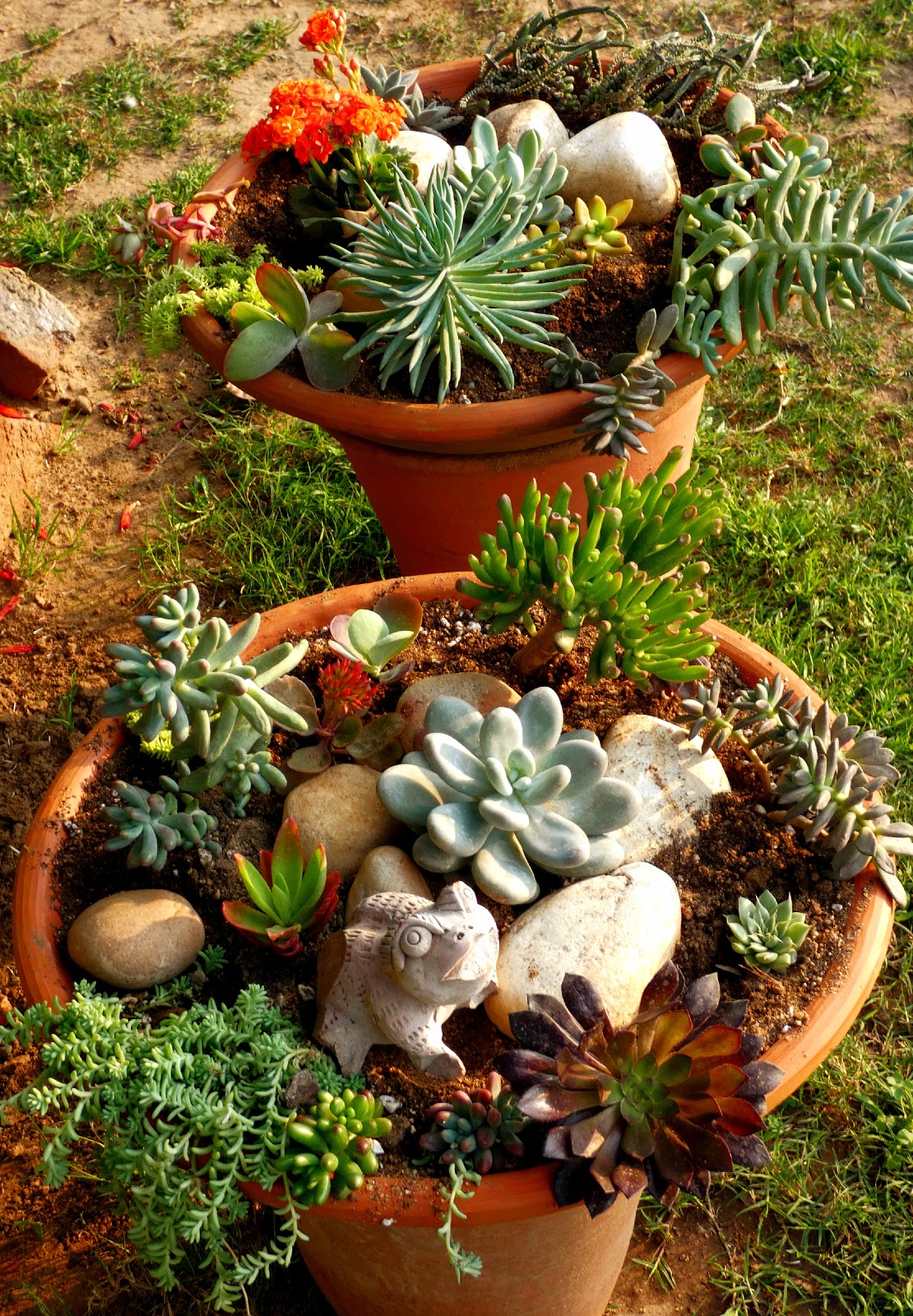
Trays of Succulents 
Meanwhile, I had collected some succulents and had arranged two trays of them. They also suffered some damage in the storm but these tiny plants are known for their sturdiness. So they are doing fine. I am still not too enchanted by them as I find flowers much more delightful. But who knows? I also got some more succulents as gift and may be another arrangement will soon follow.
Helichrysum- the everlasting flowers
To see a world in a grain of sand and heaven in a wild flower Hold infinity in the palm of your hand and eternity in an hour.

                                                                                       -- William Blake
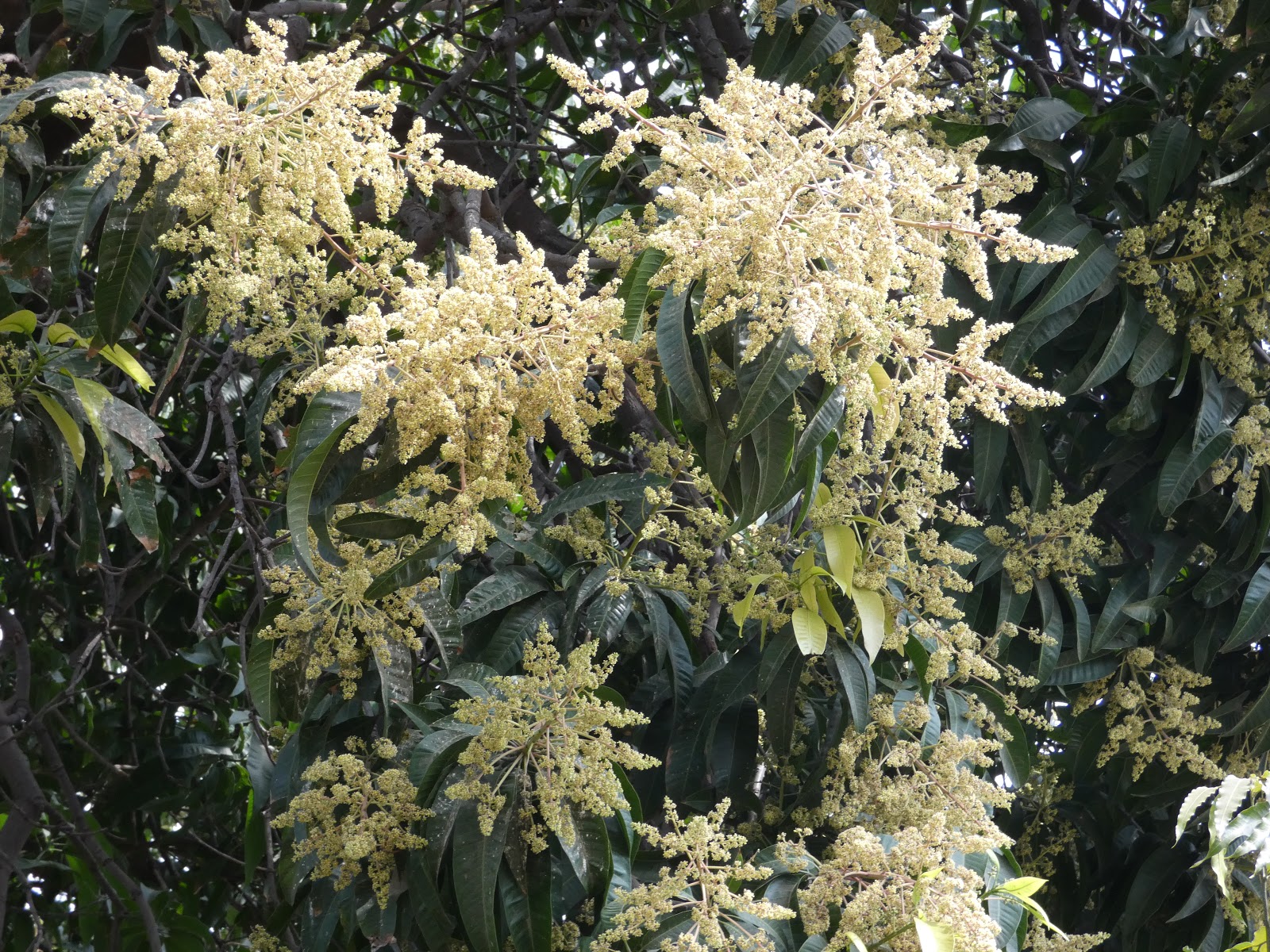
That is funny part of being a gardener. Your garden often knows better than your imagination and skill. The storm had damaged one part of mango blossom also and yet the other side of this good old tree is still  a sight to behold – full of pale yellow blossoms. As I have always believed – Mango blossom is the true portent of summer. So here it is – the summer of 2020.


Outside the limited world of my garden, there is a real scare of an epidemic. The virus is spreading world over and the normal life has been shut down in so many countries. For the first time the scorching summer sounds very welcoming. Temperature in the city is touching 32 and hopefully, we won't be affected much with the deadly virus thanks to the heat.

I just remembered that this is the 12th edition of my garden diaries. It was fun writing these posts. I do hope I will read them in future and remember the joy my garden brought me whole year through. It was a great learning for me as gardener and also as a person. I learnt the lesson of patience and moderation, a lesson of learning the skill right and most of all, I learnt that it takes a dallopful of faith and trust in nature for a garden to bloom. I am ever so grateful that I could hear the music of the earth and could hum its tune this whole year through.

Thursday, February 13, 2020

Garden Diaries: February (It’s springtime)


"Was it the smile of early spring
That made my bosom glow?
'Twas sweet, but neither sun nor wind
Could raise my spirit so.

Was it some feeling of delight,
All vague and undefined?
No, 'twas a rapture deep and strong,
Expanding in the mind!"

-  Anne Bronte, In Memory of a Happy Day in February

Spring has officially arrived in my garden. Flowerbeds are bursting with colours, birds are chirping, sunshine is bright and golden and the breeze is fresh and welcoming. I can spend all my waking hours in my garden and not get tired. There are so many kinds of flowers around that I often lose count of them.It has always been an issue with me whether to plant a single flower in a bed or have a mix of 3-4 kinds of flowers. This year I have gone for mixing...mostly . The result is not too bad. Well, there is only a finite number of plants one can have in a garden and however big is the garden - it is always a dilemma to choose the best place for each variety . I am sure I have about 20 kinds of flowers blooming right now in the garden. 


 So let me try to list them – Impatiens, Salvia, Petunia,Begonia,English daisies, Buttercups, Primroses, Mimulus , Kalanchoes, Gazania, Dahlias Pentas , Nasturtiums, Geraniums, Verbena, Pansy, Dianthus, Larkspur, Cosmos, Marigold, Calendula and  Roses . Next in line are Cineraria and Sweet peas.

Pretty buttercups
But the thing with gardening is that there is always so much to do. Chrysanthemums are almost over and need to be saved for next year. There is always need to cut worn out blooms and clean the flowerbeds. With dozens of squirrels around (who love to eat my French marigolds), there is always so much action in the garden. They chase the birds and cut out all leaves and wires.


Sitting in my garden during weekends, I cannot help feeling grateful. It is such a marvel that nature expresses itself in so many colours and patterns. Just to give an example of Larkspurs, the tall and graceful flowers – they stand out because of their blue-purple colour and their graceful waving in the wind. Then there is verbena, tiny small groups of flowers, they come in all possible colours and can melt even the most stoic hearts. Not only flowers, the variety of birds I see daily in my garden is pretty amazing too.
Some birds sighted in Bharatpur

Talking of birds, in late last month I went to Kaleodeo Birds Sanctuary at Bharatpur. I will be honest; I had never seen so many birds at one places ever before. Gosh! What variety of birds it was! From tiny Siberian blue throat to huge painted storks, from owls to vultures, from kingfishers to greater pelicans   - it was an actual carnival of birds.  Even the place where we stayed (Bagh Resort) was full of ducks, peacocks and all kinds of birds.

 Every spring
I hear the thrush singing
in the glowing woods
he is only passing through.

His voice is deep,

then he lifts it until it seems

to fall from the sky.
I am thrilled.
I am grateful.

― Mary Oliver


Back home, our spotted owlets’ family continue to sunbath in the mornings, two young peacocks knock the glass doors very often in afternoons and groups of jungle babblers, magpie robins and brahminy starlings hop around the garden. As for noise, no one can beat the parakeets who make it their business to make their presence felt.  A pair of koels are nesting in a neem tree in my house and I often spot grey hornbills on the same tree as well.

By the way, the honeybees deserted the other beehive also soon after I wrote my last post. While I see plenty of honeybees collecting honey from cosmos and marigolds, I have no idea where their new hive is located. I would like to have more butterflies around and I do hope they will get lured by the flowers.

  Amidst all this, like an anxious gardener I am dealing with the dilemma of whether I should start planning for Zinnias, sunflowers and Mexican cosmos right now or wait for few more days. Learning from my experience at the beginning of winter, I think I will wait for some more time. Though it is true that spring won't last very long and even before we know, the days will start burning and the summer will arrive .  I have always felt grateful that I live in a country where each season is so beautiful and the change of seasons is full of so much anticipation and excitement . It is inevitable that the seasons will change and the flowers will wither , but as for now, let me soak in the beauty of  my February flowers.
Larkspurs 
                                           “We need beauty because it makes us ache to be worthy of it.”
                                                                                 ― Mary Oliver

Wednesday, November 20, 2019

Garden Diaries: November (Winter is here!)


“Welcome sweet November, the season of senses and my favorite month of all.”
                                                                            ― Gregory F. Lenz
It seems bit late to welcome November. Yes, the month went by in a jiffy. It was a happy month, as I was traveling to the lands full of waterlilies and coconuts. I saw some beautiful countries and some stunning scenery. But that will be subject of a different post, hopefully soon. By the time I was back to my garden it was already mid-November and finally the arrival of winter was very apparent. If in nothing else the hundreds of Chrysanthemums made it sure that we know about the arrival of flower-season.

My Magenta Mums
A newbie gardener friend asked me the other day, how do I pick colour of flowers while planting seedlings. I had told him earlier that I grow most of my seedlings from seeds saved from last year. I had no response to his question. I do not do colour wise sorting of seeds. Very honestly, I just look at the seedlings and say – “Now come on, surprise me!”.  More often than not, they do. So this time the Mums planted from the cuttings of last year in one long flowerbed turn out to be of same colour…. surprise! The flowerbed made up of bubble-gum striped Petunias (pink and white), Asters (purple, white and pinks) and now, Mums of predominantly magenta   looks very different from what I imagined while planting these. To add some more colour, I have now put a line of Calendulas and Dahlias in it. I hope they will even out this predominance of pinks.


Salvia on the contrary, surprised me in a different way. Other than the usual classic red, this time I am lucky to have at least 6 more colours of purple, yellow and white in my garden. There is one orange colour flower with white inside. It made my heart jump with joy.
 Last year I spent some anxious days planning what to plant in two flowerbeds that are below the big mango tree and thus in shade mostly. I could only think of Cineraria. While it did flower there finally, I had to wait till almost February to see some flowers. This year, I am experimenting with Impatiens for the first time. I had planted them just before I left for my vacation and now- in almost a month, they are already showing a flower here and two there.  I have seen Impatiens in other countries many times but for my garden this is a first. So far it shows promise. It is so difficult to find shade loving plants that have flowers – so, I patently wait for my Impatiens to grow.  
Impatiens so far
Other than these, after months of fighting with earthworms, the lawn is now coming to normal. The other winter annuals- Pansies, geraniums, Cineraria, Antirrhinum (dog-flower), Nasturtiums and Marigolds are coming up nicely. After two unsuccessful attempts even pink cosmos plants are finally growing well behind a flower bed of Mums. In the seed trays – I still have ice plant, Helichrysum (Everlasting flower) and larkspurs. I want to grow a lovely bed of purple larkspurs for a friend who loves them. Though she is not in the same city, I am sure she will be delighted to see images of my garden with larkspur, if I am successful in growing them.


The real delight of coming back home after two weeks was in the vegetable garden. Our radishes are ready to be consumed- white as milk and juicy to the core . Spinach, fenugreek leaves (Methi) and tomatoes are also almost there. Cabbages and carrots are growing well and though I don’t eat them Brinjals are available in plenty. My two Amla trees are full of Amla (gooseberry) and it makes the yummiest of   chutney.

In the early days of November, soon after Diwali, Delhi and region around it faced terrible bout of air pollution and smog. It had reached hazardous level in Delhi NCR but had some effect even in Jaipur. Now that we are back of the bright sunny days and almost blue sky, we should be thankful. Every morning, when I read the news of thousands of birds dying in Sambhar Lake, it pains me. We do not realize the value of clear water, blue sky, birds and flowers, till we don’t have them anymore. I think a gardener can truly appreciate the value of these things and be grateful for them. I feel grateful for each plant that is blooming in the garden, each dose of fertilizer that is nourishing them and each bird and squirrel that comes to share my garden.