Showing posts with label flowers. Show all posts

Thursday, February 8, 2024

Sights and Seasons of Paradise: Of Cherry Blossoms and Tea Gardens


Kerala is a shade card of green—an artist’s dream where every brushstroke reveals a new hue of life. When I look around, I see the deep green of hibiscus bushes, the dappled tones of jackfruit trees, the jade shimmer of paddy fields, and the wild, fern green that carpets the roadsides. The sea-green calm of the backwaters, the bluish tinge of the Malabar parrots in flight, and the velvety moss that clings to old stone walls after a rain—all speak of Kerala’s endless love affair with green.

But of all these, my heart belongs to one shade alone: the glowing green of tea gardens. It’s a saturated, mature green—neutral yet luminous—with just a whisper of golden undertone. Every time I see it, my heart leaps like it's greeting an old friend.

Over the last two months, I’ve had the joy of visiting Munnar twice on back-to-back weekends. Both times, the hills rolled out their tea-green carpet for me, and I drank in the beauty with greedy eyes. But my most recent trip in February was a double bonanza—not only were the tea gardens radiant under the soft sunlight, but the entire valley was adorned with delicate bursts of cherry blossom pink.

The contrast was breathtaking. Rows of manicured tea bushes stretched across the hills like nature’s own patchwork quilt, and rising among them were cherry blossom trees in full bloom, their soft pink petals fluttering gently in the breeze. It felt as if spring had spilled a few extra brushstrokes over Munnar just for us.

The morning mists added their own magic. The soft fog drifted lazily over the hills, lifting slowly to reveal a landscape painted in poetry—green underfoot, pink in the air, and blue skies peeking through like shy companions. Walking through the tea estates felt like stepping into a living postcard, only better—because it came with the scent of earth, the chirping of hill birds, and the quiet hum of a place that knows how to breathe.

Munnar, nestled in the idyllic folds of the Western Ghats, is one of Kerala’s most picturesque hill stations—where the hills wear tea plantations like velvet, and flowers bloom as if painted by hand. But to witness delicate pink and white cherry blossoms blooming against the sculpted slopes of tea gardens is a sensory delight of another level. The soft pastels of the blossoms don’t just stand out—they harmonize, weaving seamlessly into the lush green tapestry of the land. It's as though nature has composed a visual symphony, where every shade, scent, and sound is in perfect balance.

The delicate flowers of the cherry tree have always held a special place in my heart. Their fleeting beauty has inspired poets, painters, and dreamers for centuries, particularly in Eastern cultures where entire festivals—like Hanami in Japan or Beotkkot in Korea—celebrate their bloom. I’ve admired cherry blossoms from afar and up close—marveling at them in Washington, Copenhagen, and Nanjing. Yet, the dream of witnessing Sakura season in Japan remains high on my travel wish list.

What I hadn’t expected, though, was to find them right here—quietly blooming in the hills of Munnar.

It happened by chance. I was staying at a charming guest house tucked among the tea estates. One crisp December morning in 2023, I was attempting to photograph a sunbird darting between branches when my camera lens zoomed in on something unexpected: a single pale pink flower at the end of a twig. My heart skipped a beat. Could it be? I looked closer. Yes—there it was, unmistakably—a cherry blossom. A lone bloom, shy and almost hidden, but radiating the quiet magic I had always associated with springtime in faraway lands.

By the time I returned in February, the transformation was complete. The once modest branches were now generously covered in blossoms, and not just at the guest house. All around Munnar, cherry trees had burst into bloom, lighting up the green canvas of the hills with gentle pink and white hues. It felt like the landscape had been sprinkled with poetry.


"What a strange thing!
to be alive
beneath cherry blossoms."
Kobayashi Issa

Cherry blossoms have always held an elevated status in East Asian cultures. In China, they are often associated with love, feminine beauty, and the delicate power of the female mystique. But nowhere in the world are these elusive, ethereal flowers more revered than in Japan. In the Japanese imagination, cherry blossoms are more than just seasonal flora—they are symbols stitched into the very fabric of life. The imagery finds its way into paintings, films, haikus, and even everyday language, forming a quiet but persistent cultural undercurrent.

Much like my other favorite flower, the waterlily, cherry blossoms hold deep significance in the Buddhist philosophy of the East. Both are steeped in symbolism that touches the soul. The cherry blossom, in particular, is a timeless metaphor for human existence—fragile, beautiful, and fleeting. Their blooming season is short, yet powerful; glorious, yet transient. And it is precisely this transience that gives them such emotional weight. They remind us that everything is impermanent. That joy, sorrow, beauty, and life itself—are all momentary. They ask us, gently but insistently, to live in the present and to embrace each moment as if it were a petal that might drift away at any time.

Standing beneath cherry blossoms in Munnar, far from the traditional Sakura trails of Japan, I felt that same tug at the heart—the quiet ache of beauty that doesn’t last. It made the experience even more poignant, like stumbling upon a secret the hills had kept just for themselves.

Finding bulbuls, finches, and shrikes flitting among the cherry blossoms in the early mornings filled my heart with quiet joy. Watching them nibble at the delicate petals—completely at home among such beauty—was like witnessing a conversation between birds and blooms, and I felt lucky to be eavesdropping on nature’s little secret.

While the cherry blossoms and the birds dancing through them were undoubtedly the highlight of my visit, Munnar offered much more than I could have imagined. The hills rolled gently into mist-veiled valleys, streams gurgled with playful abandon, and waterfalls tumbled down rocky faces like silver threads. Every corner of the landscape seemed curated with care—as if Mother Nature had taken special pride in this part of the world.

The tea plantations, with their uniform yet undulating rows, provided both rhythm and calm to the eye. The rare flora, the occasional glimpse of wild creatures, the scent of eucalyptus in the air, and the ever-changing skies—it all came together to create an atmosphere that was both serene and awe-inspiring. Munnar didn’t just feel like a destination—it felt like a poem written in green and gold, with pink blossoms as its punctuation marks.

I was told that Munnar gets its name from its unique geography—nestled at the confluence of three rivers: Kannimalai, Nallathanni, and Kundala. In Malayalam, "Moonu" means three and "Aru" means river. So, quite literally, Munnar is the land where three rivers meet—a fitting name for a place where so many elements of nature also come together in harmony.

Today, Munnar is a lively hub, drawing in tourists, honeymooners, nature lovers, and hikers from across the world. And it welcomes each one with open arms—offering something different to everyone. Whether it's the mist rolling over the tea-clad hills, the thrill of a trek through a shola forest, the hush of hidden waterfalls, or the quiet company of a cherry blossom tree, Munnar never runs out of ways to enchant.


It’s rather funny—and a little surprising—that this gem of a place remained relatively unknown to the wider world until just about 150 years ago. The story goes that John Daniel Munro, the British Resident of the Travancore kingdom, first set foot in Munnar in the 1870s while resolving a border dispute between Travancore and the neighbouring Madras Presidency. Captivated by the beauty and potential of the region, Munro persuaded the royal family to lease the land to him.

What followed was a quiet transformation of the landscape. In 1879, the North Travancore Land Planting & Agricultural Society was formed, and soon, experimental cultivation began—ranging from coffee and cardamom to cinchona and sisal. But it was the introduction of tea that would rewrite Munnar’s destiny.

Tea arrived with a man named A.H. Sharp, who planted it on around 50 acres of land at Parvathy—now part of the Seven Mallay estate. The success of that modest beginning soon overshadowed all other crops. By 1895, the influential Finlay Muir & Company (James Finlay and Company Limited) acquired 33 independent estates, and two years later, the Kannan Devan Hills Produce Company was established to manage them.

Today, most of the sprawling estates are managed either by Tata or by the Kannan Devan Plantations Company—continuing the legacy that began over a century ago. The rolling tea gardens that stretch as far as the eye can see are more than just scenic—they are chapters in a story of ambition, adaptation, and transformation.


I’ve come to believe that it’s nearly impossible to visit any part of Kerala without encountering a tale from the Ramayana or Mahabharata woven into its landscape. The land feels storied—its rocks, rivers, and forests quietly echoing the steps of mythic figures. The moment you travel out of Trivandrum towards Kottayam, for instance, you come across the massive Jatayupara—the rock where the legendary bird Jatayu is believed to have fought Ravana as he abducted Seeta.

Closer to Munnar, nestled deep within the lush serenity of the Devikulam Reserve Forest, is a secretive lake known as Seetha Mata Lake. It is said that Seeta bathed here during her exile. The lake lies hidden amid the tall woods, about 13 km from Munnar, and remains a place of quiet reverence for those who visit. Many locals believe the waters have therapeutic properties, though I cannot vouch for the legend or its healing powers. But what I can say is this—on the rainy day I visited, with mist drifting between trees and raindrops dimpling the lake’s surface, it was a vision of untouched purity. Even under the clouds, it felt sacred. And it wasn’t hard to imagine how breathtaking the place must be on a clear, sunlit day, when the water mirrors the sky and the forest glows emerald.

On my way back from Munnar, winding through the serene tea estates draped over sloping hills, I found myself once again reflecting on the quiet wisdom nature offers us. Across cultures and centuries, humans have turned to the natural world—for solace, for worship, for meaning. We pray to its forces, celebrate its changing seasons, and find comfort in the eternal rhythm of transformation.

Take cherry blossoms, for instance. Their delicate bloom has long symbolized the impermanence of beauty—how something so fleeting can still leave an indelible impression on the soul. In their brief, breathtaking appearance, they teach us to live in the moment, to treasure what is, and to let go with grace. The sentiment echoes through the pages of time, most notably in The Tale of Genji, where Murasaki Shikibu wrote:
“Yes, the cherry trees put this truth very plainly: none of the glory of blossoms and autumn leaves lasts long in this fleeting world.”

And perhaps that is the truest takeaway from my time in Munnar—that in the ephemeral lies the eternal. The pink of the blossoms, the tea-green of the hills, the call of the bulbuls, the mist over the valleys—all may pass, but the memory of their presence lingers. Munnar, in its quiet grandeur, reminds you not only how beautiful the world is, but also how beautiful it is to notice.

Thursday, March 19, 2020

Garden Diaries: March ( A season passes by )


A time to be born, and a time to die; a time to plant, and a time to pluck up that which is planted;
Ecclesiastes 3:2
On 5th March, my garden was on full bloom. Sun was shining bright and birds were chirping as usual. When I went home for lunch around 2 PM, I happily checked my flowers and my seedlings (sunflower and zinnia) and even took some photos of Delphiniums, Larkspurs, Nasturtiums and Cineraria.
Hailstorm
Around 4 PM, there was a sudden hailstorm……. the lawn turned white and the flowering plants were slayed within minutes. Hailstones of the size of golf ball were too much for my delicate flowers to bear. At the end of it Nasturtiums, cinerarias and Petunias were gone completely. Few pots and flower beds in shade of trees survived the worst.  Kalnchoes and Impatiens suffered major damage and in short, the garden was ruined. It was a sad sight and it broke my heart.

Orange blossoms
Next morning, the sun was back, so were the birds and while I was still mourning the destruction of yesterday, nature had started building up. The geraniums started showing new buds in few days and even the petite pansies fought back. The water in waterlily tubs had turned black but soon, I saw new leaves of waterlilies too. The calendulas and Helichrysum braved the damage and again stood tall.


 I was still sad thinking of the premature ruin of my pretty flowers. Then on a Saturday, standing out in bright sun I saw a blue sunbird happily frolicking among the larkspurs. It was such a heart-warming sight. Standing in the middle of ruined flowerbeds, I smiled.

Since then, slowly but surely things have warmed up in the garden. Nastratiums are now replaced by the tiny seedlings of Zinnia and in place of my pretty pink petunias, I have planted Giant Russian Sunflowers. Gaillardia and Vinca will be next and of course Kochia and Portulaca. It is said that “A good gardener always plants 3 seeds -one for the bugs, one for the weather and one for himself.” But well, I did not. Hailstorm also killed many of the seedlings. The mis-calculation has costed me one full month. At present I have vacant flower beds but nothing to plant. My Mixed Zinnia seeds are coming up slowly and hopefully in another 20 days I will be all set to face the summer with my summer flower garden.

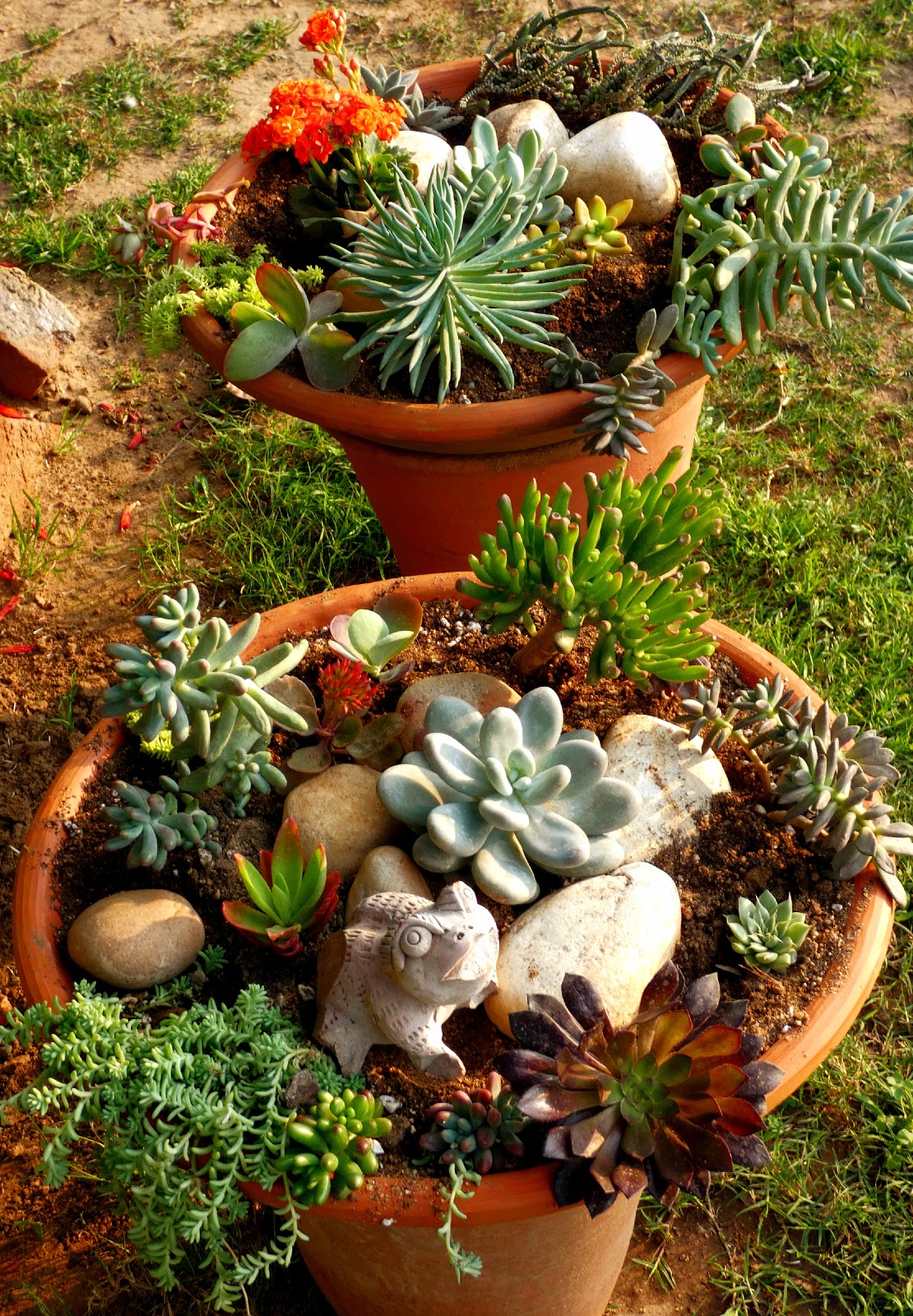
Trays of Succulents 
Meanwhile, I had collected some succulents and had arranged two trays of them. They also suffered some damage in the storm but these tiny plants are known for their sturdiness. So they are doing fine. I am still not too enchanted by them as I find flowers much more delightful. But who knows? I also got some more succulents as gift and may be another arrangement will soon follow.
Helichrysum- the everlasting flowers
To see a world in a grain of sand and heaven in a wild flower Hold infinity in the palm of your hand and eternity in an hour.

                                                                                       -- William Blake
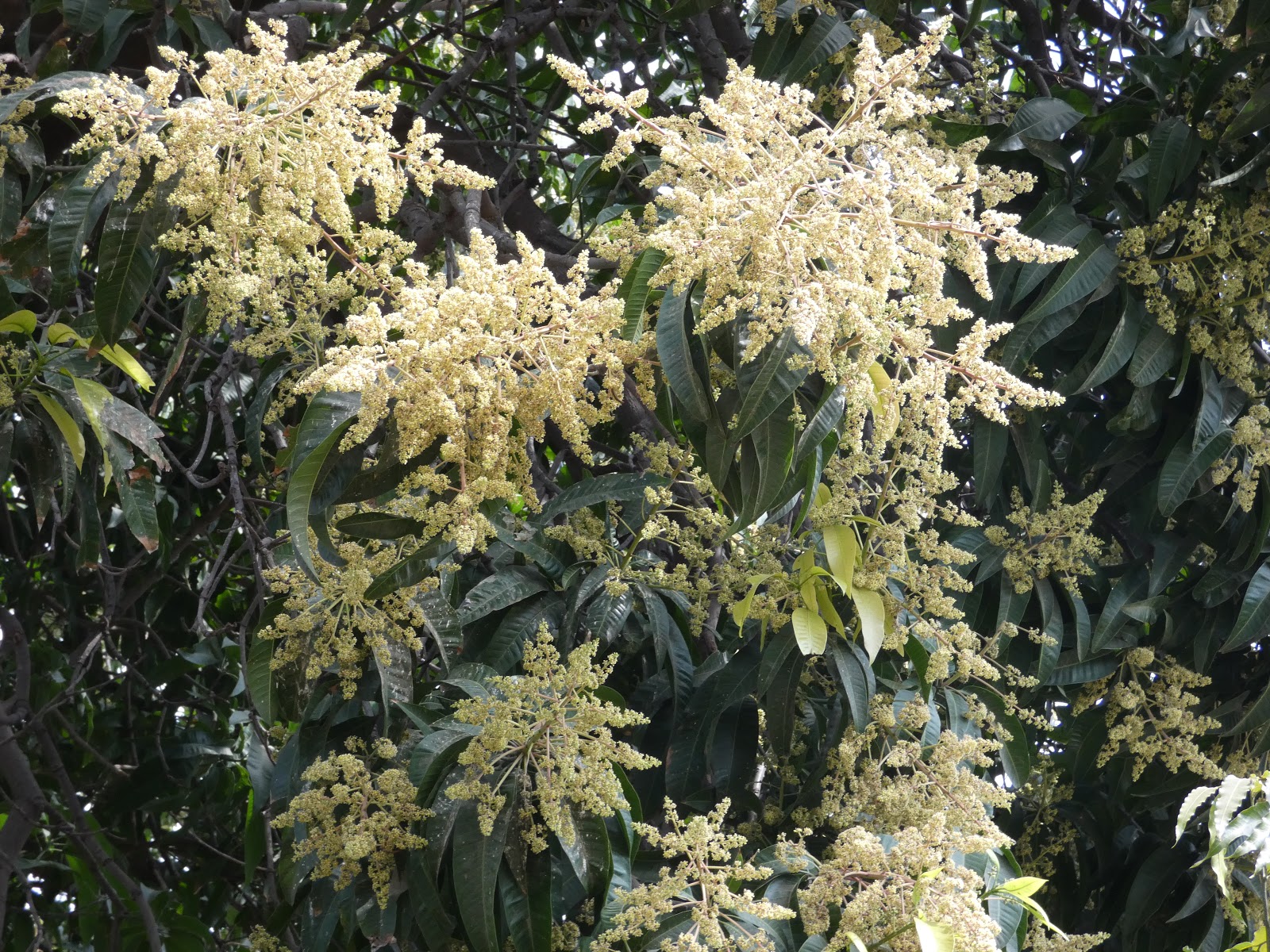
That is funny part of being a gardener. Your garden often knows better than your imagination and skill. The storm had damaged one part of mango blossom also and yet the other side of this good old tree is still  a sight to behold – full of pale yellow blossoms. As I have always believed – Mango blossom is the true portent of summer. So here it is – the summer of 2020.


Outside the limited world of my garden, there is a real scare of an epidemic. The virus is spreading world over and the normal life has been shut down in so many countries. For the first time the scorching summer sounds very welcoming. Temperature in the city is touching 32 and hopefully, we won't be affected much with the deadly virus thanks to the heat.

I just remembered that this is the 12th edition of my garden diaries. It was fun writing these posts. I do hope I will read them in future and remember the joy my garden brought me whole year through. It was a great learning for me as gardener and also as a person. I learnt the lesson of patience and moderation, a lesson of learning the skill right and most of all, I learnt that it takes a dallopful of faith and trust in nature for a garden to bloom. I am ever so grateful that I could hear the music of the earth and could hum its tune this whole year through.

Wednesday, November 20, 2019

Garden Diaries: November (Winter is here!)


“Welcome sweet November, the season of senses and my favorite month of all.”
                                                                            ― Gregory F. Lenz
It seems bit late to welcome November. Yes, the month went by in a jiffy. It was a happy month, as I was traveling to the lands full of waterlilies and coconuts. I saw some beautiful countries and some stunning scenery. But that will be subject of a different post, hopefully soon. By the time I was back to my garden it was already mid-November and finally the arrival of winter was very apparent. If in nothing else the hundreds of Chrysanthemums made it sure that we know about the arrival of flower-season.

My Magenta Mums
A newbie gardener friend asked me the other day, how do I pick colour of flowers while planting seedlings. I had told him earlier that I grow most of my seedlings from seeds saved from last year. I had no response to his question. I do not do colour wise sorting of seeds. Very honestly, I just look at the seedlings and say – “Now come on, surprise me!”.  More often than not, they do. So this time the Mums planted from the cuttings of last year in one long flowerbed turn out to be of same colour…. surprise! The flowerbed made up of bubble-gum striped Petunias (pink and white), Asters (purple, white and pinks) and now, Mums of predominantly magenta   looks very different from what I imagined while planting these. To add some more colour, I have now put a line of Calendulas and Dahlias in it. I hope they will even out this predominance of pinks.


Salvia on the contrary, surprised me in a different way. Other than the usual classic red, this time I am lucky to have at least 6 more colours of purple, yellow and white in my garden. There is one orange colour flower with white inside. It made my heart jump with joy.
 Last year I spent some anxious days planning what to plant in two flowerbeds that are below the big mango tree and thus in shade mostly. I could only think of Cineraria. While it did flower there finally, I had to wait till almost February to see some flowers. This year, I am experimenting with Impatiens for the first time. I had planted them just before I left for my vacation and now- in almost a month, they are already showing a flower here and two there.  I have seen Impatiens in other countries many times but for my garden this is a first. So far it shows promise. It is so difficult to find shade loving plants that have flowers – so, I patently wait for my Impatiens to grow.  
Impatiens so far
Other than these, after months of fighting with earthworms, the lawn is now coming to normal. The other winter annuals- Pansies, geraniums, Cineraria, Antirrhinum (dog-flower), Nasturtiums and Marigolds are coming up nicely. After two unsuccessful attempts even pink cosmos plants are finally growing well behind a flower bed of Mums. In the seed trays – I still have ice plant, Helichrysum (Everlasting flower) and larkspurs. I want to grow a lovely bed of purple larkspurs for a friend who loves them. Though she is not in the same city, I am sure she will be delighted to see images of my garden with larkspur, if I am successful in growing them.


The real delight of coming back home after two weeks was in the vegetable garden. Our radishes are ready to be consumed- white as milk and juicy to the core . Spinach, fenugreek leaves (Methi) and tomatoes are also almost there. Cabbages and carrots are growing well and though I don’t eat them Brinjals are available in plenty. My two Amla trees are full of Amla (gooseberry) and it makes the yummiest of   chutney.

In the early days of November, soon after Diwali, Delhi and region around it faced terrible bout of air pollution and smog. It had reached hazardous level in Delhi NCR but had some effect even in Jaipur. Now that we are back of the bright sunny days and almost blue sky, we should be thankful. Every morning, when I read the news of thousands of birds dying in Sambhar Lake, it pains me. We do not realize the value of clear water, blue sky, birds and flowers, till we don’t have them anymore. I think a gardener can truly appreciate the value of these things and be grateful for them. I feel grateful for each plant that is blooming in the garden, each dose of fertilizer that is nourishing them and each bird and squirrel that comes to share my garden.


Saturday, October 19, 2019

Garden Diaries: October (Desperate for Winter)


“I'm so glad I live in a world where there are Octobers.”
― L. M. Montgomery, Anne of Green Gables

I truly appreciate the sentiment of the quote above. During my travel abroad, I have seen the glory of autumn when every leaf turn yellow, red or orange. It is just a riot of colours and such  a lovely transition from summer to winter. In US , the celebration of Halloween also comes during the month and Pumpkins of all sizes are decorated.
Octobers in India are not like that. They are, however, lovely in their own ways. In India also this is usually the month of festivities of Navrati , Dussehra and then Deepawali. For me October is a month of sweet-winter sunshine, lovely mornings and planting of winter annuals. As long as I remember, we have been planting our seedlings in October for winter flowers.


But then, there is climate change. It is so real and obvious now that one third of the October is already gone and the monsoon is still around. The millipedes are still digging up my lawns and the clouds dutifully turn up every now and then. The impatient me , is desperate for the change of weather but the day temperature refuses to drop. In the sunny days, it is quite hot and the cloudy days are even worse. The mornings, though cooler than before, have not reached the level of typical October mornings.  The rains have overstayed their welcome and continue to flood my flowerbeds.

Yet, unable to stop myself, I have planted some asters, petunias and salvias so far and I am waiting for rains to go completely before I venture further with marigolds and calendulas, Pansies, Nasturtiums and daisies. I have also put seeds for some cosmos and cineraria and hope that the weather Gods will oblige a dip in temperature to make germination possible.

Luckily, despite the continued heat and rains, Mums are doing fine and finally Balsam is flowering.  Last weekend I also attempted planting some Geraniums in pots and I hope they survive the weather. Same day, I also planted my Petunia stars. It was a nice sunny day and then by the noon, the clouds started gathering. It rained cats and dogs for about an hour. Petunias (much like me) do not like their feet wet. But thanks to the rains, the bed was flooded. Luckily since then, it has not rained and plants have managed to survive the onslaught.

On one such humid Sunday, I found a golden oriole on a tree nearby. I had never seen this pretty yellow bird and was mesmerised by its appearance and its song.  The Green Bee eaters are always roaming around and the kingfisher is often seen in the afternoons on his usual tree. On one Sunday, in an hour, I found Coppersmith barbets, Plum faced parakeets, Grey Hornbill and even a Blue Roller.  But to make my heart glad, about a few days back my favorite family of spotted owlet flew back. The three of them are now often seen enjoying the sun on the neem tree. The other delightful news is about the peahen, who has chosen the roof of our guard room to lay her eggs. She is usually sitting there whole day and only steps down early morning to get some food.

For the waterlilies, our little experiment of burying 8 water tanks in the ground around fountain seems to have worked.   So far, it is only an occasional waterlity or two , but I do hope that in winter months, there will be much more beauty in my little ponds.
In absence of seasonal flowers, plants like Anthurium (Flamingo flower), Mussaenda and some kalanchoes are my saviours. They break the monotony of green and make the garden look happy.

October also turn out to be a busy month for sowing vegetables and filling up patches of hedge . Now that I will be travelling half of next month, I want to complete the work in garden a lot more impatiently. 

Friday, May 17, 2019

Garden Diaries- May (It's May, it's May, the month of great dismay)


Glorious Amaltas- the Golden Shower
              
                “Summer has set in with its usual severity.”
                                                       --Samuel Taylor

The sunshine is bright and blazing almost whole day. Even a sight of shade provides some relief to the eyes. Birds are always looking for the bowls of water to splash in and the plants get dried up however much we water them. Well, it is the desert land and you cannot expect an easy summer. This month and the next is harsh to get by for the birds. Even local newspapers appeal to put water for birds and set up birdhouses on trees. The usual chirping comes down from 9 in the morning till late evening (barring some parrots of course who continue to engage with us in a battle of wits over ownership of raw mangoes – Needless to say they win).
 
Parrots  attacking raw mangoes

Earlier this month, on a Thursday morning – the sky was pale blue with no clouds in sight, weather was getting warmer and as usual, this peacock came to our garden. It happily ate its daily staple diet of the bird feed and insects, took a stroll around flowerbeds and suddenly, it was dancing.  Oh, what a performance it was. No words can suffice to that display of colour and I guess contentment (which no doubt came from a good meal). And this is how, ordinary Thursdays turn magical in the marvelous month of May.
Dance Performance in the Garden

AA Milne wrote somewhere that “I regretted that the loveliness of May was lost for so many in the clamour of elections when the only 'issues' which really mattered were the apple and cherry blossom, the budding flowers, and the fresh pale green of birch and beech.” 

 If I think of the Indian Summer alternative to English apple and cherry blossoms, it would be definitely yellow Amaltas (Golden Shower tree) and red Gulmohar (Delonix regia). Yes, election talk even here overshadowed every other real issue. But for anyone keeping his/ her eyes open, it is difficult to overlook the beauty of trees turning the brightest of yellow and red. In India, it is typical to line up the streets with these trees. They flower simultaneously and make such a delightful sight in summers. For me, these flowering trees of Amaltas and Gulmohar and the cuckoo singing on the mango trees are two most endearing sights of Indian Summers. I feel lucky to have many Amaltas and Gulmohars around my house .
जियें तो अपने बग़ीचे में गुलमोहर के तले,
 मरें तो ग़ैर की गलियों में गुलमोहर के लिये
May is not a very forgiving month for flowers but then you have some brave hearts. I am specifically partial to Zinnia- which bloom from summers to monsoons with great gusto. This time we are particularly lucky with Zinnias. We have all possible colors and shades in them and they provide a delightful respite from the dearth of colour in my flowerbeds otherwise.
Colors of Zinnia
My giant sunflower plants are now much taller than me and are full of promise. Buds are already opening and I do hope to see the most beautiful shade of yellow in the garden. Meanwhile, birds are building nests all over the house – inside the hedge, behind the ACs, over the telephone box and of course, in the shrubs and on the trees. Many nests also have eggs. The family of Grey Francolins (Teetar) gleefully march with their latest generation, reminding me of the old film song (Teetar ke do aage teetar ……). In the wild mulberry tree, I have noticed a small nest built by a robin and you can see blue eggs inside. I have been warned by a birder friend not to go very near the nest, in search of a good photograph, as that might attract predators to the nest.

Two happy updates from last month- my owlet family has a new addition too. The junior is very shy and hardly steps out of the tree hole but like all kids, it is curious enough to peep now and then. The eyes are still white, unlike parents and the little one is exceptionally cute.
Baby owlet i.e. Ullu Ka Pattha
Also in my little waterlily pond, we have finally got another colour. Most adorable shade of peach pink which melts my heart every morning. I wish the pond was bigger to accommodate more of these waterlilies.

By the way, some Mangoes have survived too, despite vicious continued attacks from parrots and pigeons. Now they are big enough to be used for pickles, chutneys,panna and all such delightful recipes which taste of summer and we are taking full advantage of them.

While the city regularly faces evening thunderstorms followed by some raindrops, by the morning it is again hot. Hope June will bring some real rain showers.
New colour of Waterlily( Nilopher) 


Wednesday, April 17, 2019

Garden Diaries – April ( Hope is in the Air)


"O Day after day we can't help growing older.
Year after year spring can't help seeming younger.
Come let's enjoy our wine cup today,
Nor pity the flowers fallen."


                           -  Wang Wei, On Parting with Spring


Yes, it is April and the spring is very much over. In fact, it has left us in the end of March itself when the flowers started withering and the sunshine became sharper. Now, almost in the middle of April, I see all the portents of Indian summer around me. Neem trees are flowering, Amla tree is showing new leaves and most importantly, Mango blossoms have turned into small raw mangoes. In my part of the world, it is not easy for mangoes to ripe peacefully.  First you have pandemonium of parakeets who find them irresistible – though half the times they just peck the fruit and play with it rather than eating it - and then almost every second evening, there is a thunderstorm making little raw mangoes fall. Well, as of now I still have some kairi (raw mangoes as they are called in Rajasthan) on the tree and I do hope they will survive all this.

Brave little Amiya/ Kairi still surviving Birds and Thunderstorms

But before we go any further, a word (or two) about my garden diaries. The inspiration came from Katheleen N Murray’s My Garden in Wilderness. It was such a delightful read, suggested to me by my friend Rajneesh. The joy of growing a garden is something only a gardener can understand. You are so fascinated by the changing scene in the garden- the first flowers, the attacks by birds, the swarming of bees and the never-ending weeds that you end up talking about it all the time. In my case, I found almost all my google searches and social media shares were turning to be about my garden. Like Ms. Murray, I am sure, I would like to read about my Jaipur-garden-experience again in future and may be re-live the joys and anxiety of a gardener. So the diaries are primarily for my own future reading. I am putting them on my blog, because this is where I write about things dominating my thoughts including gardening. I have earlier also written about my love for gardening and even my Gardening genes , my childhood summer days with Khus scented siestas and waking up with Cuckoos song .
So here we go – I hope to come up with monthly editions of my garden diary. Suggestions (on gardening) and comments on my post are welcome, as always.

My waterlilies
 Back to April , it is not the prettiest month in the garden. In Jaipur where I live, it is getting hotter by every passing day and the beautiful days of seasonal winter flowers are long over. Luckily, I was prompt enough to grow seedlings for my sunflowers, Zinnias, Celosia and Cosmos in February end and that's why the flower beds are now full of neat rows of plants …and a hope of flowers very soon. In fact Zinnias are already showing early blooms. Of course, I had to pinch many buds so that the plant  grow better and thicker , but I do have some flowers here and there .


Buds on Bela plant
However, the flowers which make my heart dance with joy these days, are none of these seasonals. It is our good old Bela – also called as Mogra or Motiya in India and Arabian jasmine elsewhere. Interestingly the botanical name Jasminum sambac is supposedly derived from Sanskrit word Champak. The fragrant white flowers, are loved all over Asia. It is national flower of Philippines and also Indonesia. In China it is used in Jasmine tea and in India, it is used to make gajras- the flower ornament for hair. Just a handful of these in a room can fill the room with intoxicating fragrance. The variety I have in my garden in the creeper and it is full of flowers every night. I keep them in my flower bowls, on my office table and even next to my pillow.
Surprisingly, the heat is suiting my herbs. Carrom, Rosemary and thyme are all suddenly full of life. I am growing lemongrass for the first time and even that has responded pretty well to summer.
Amla tree showing new leaves 
 “And so with the sunshine and the great bursts of leaves growing on the trees, just as things grow in fast movies, I had that familiar conviction that life was beginning over again with the summer.” 

                                                  -― F. Scott Fitzgerald, The Great Gatsby

A delightful scene change in April is bursting new leaves on all trees. There are new leaves all around. I saw the Amla growing new leaves for the first time and it is beautiful.  My lone Frangipani, the centerpiece of my lawn is full of new leaves. In the mornings it is full of chirping bulbuls, mynas, parrots, magpies, cuckoos and of course, squirrels. It attracts a lot of bird and squirrel activity around it partly because   it is in the center of the lawn and partly because I put bird feed and water in terracotta bowl under it. Most of the bird feed however is either taken by squirrels or a pair of Yellow-wattled lapwings ( Titehri in Hindi ) – who are always present in the garden.

Fragrant Desi Gulab
Few plants of  Desi Gulab  are thankfully giving some flowers. They add to the aroma of morning breeze full of mogra fragrance and also add some colour. The Indian desi Gulab or musk rose (Rosa moschata), a very fragrant rose variety, is closely related to the Damascus rose  that originated in Persia. It produces small flowers with pink petals. The petals retain their delicate fragrance long after drying. I dry some of these and use them in my recipes too.

Other than my seasonal Kochias and Portulacas , there is nothing much to plant in pots . Some Adeniums were flowering till now but nothing much to add colour. In the climbers, I have a Rangoon creeper (Madhumalti ) full of pink and white flowers and then there are couple of Bougainvilleas . Not much flowers in Bougainvilleas this season as the plants were recently planted.
Rangoon Creeper i.e. Madhumalti


While the other birds – pigeons, doves and bulbuls seem busy all the time either collecting food or collecting straws to build nests, the peacocks scream early mornings and evenings – perhaps hoping for a rain-shower. They even provide us with an occasional dance performance in the lawn after a heartful meal of bird feed and well,  insects from the waterlily pond.

Mukund during his morning performance


 The only bird who seem to be ill at ease with summer heat , like me,  is the family of owlets who live in a tree hole nearby. The heat seem to be bothering them so much that these days they make appearance even in day time. The one owlet (I have named him Peetaksh-the one with Yellow eyes) usually see me off when I get into car for office. On Sundays also, it often peeps out of its hole and occasionally in late evenings even daringly come to the water bowl for a sip or splash.

It is too hot to stay inside all day -Peetaksh
As I look at it, April is a month full of hope. Hope of ripe mangoes, hope of sunflowers and hope of surviving the green lush of the lawn in the heat. More than anything, hope that the May will be kinder to the garden and its beings. As someone said - April is a promise that May is bound to keep.


Flowers in April -Zinnias, Cosmos and an occasional Rose